

Consumer product redesign
Ordering an LPG cylinder shouldn’t feel uncertain.
This project focused on simplifying a familiar but frustrating flow by aligning it with established user mental models.
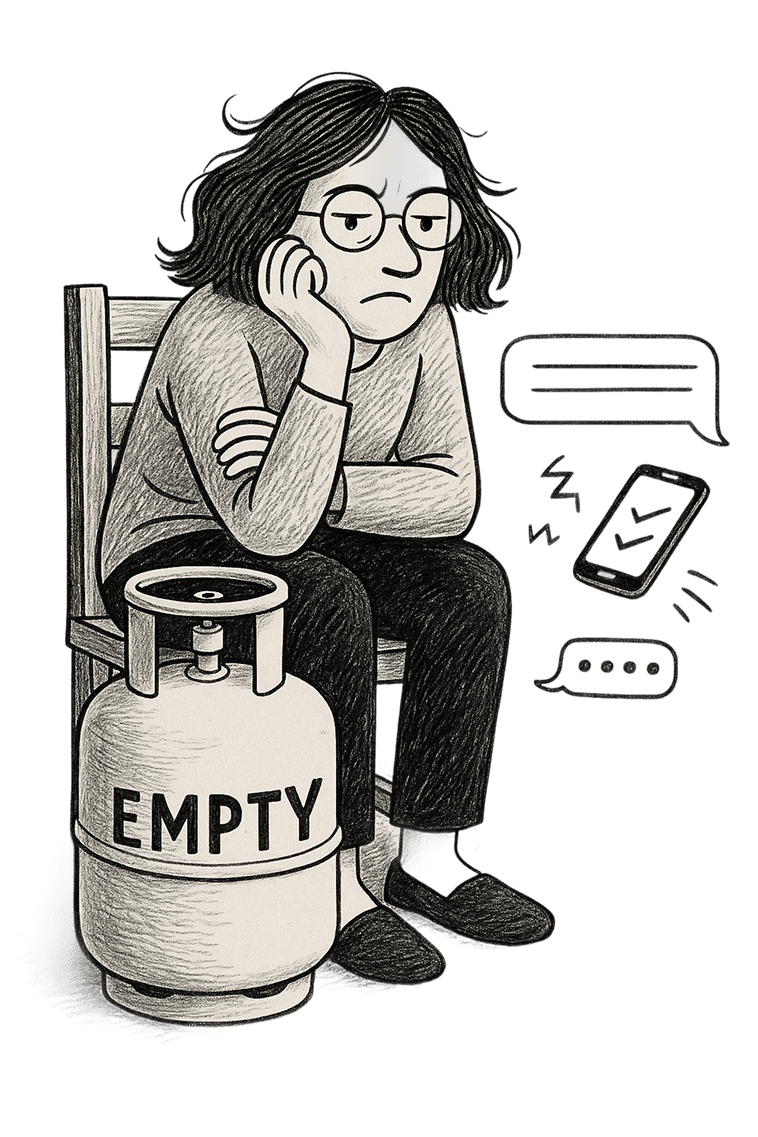
If you've ever had to order an LPG cylinder in India, you already know:
It can be chaotic.
Confusing timelines, unclear status updates- when will the cylinder come and when will I my eggs boil, anonymous delivery agents (who might or might not ask for tips), and a process that feels like it was designed to fail us.
Easygas - A subsidiary of TotalEnergies wasn’t new in the market.
But it felt old. My job? Not just a redesign, but a re-imagination.
The brief was thin. The problems weren’t. And the timelines?
Let’s just say they believed in "scrappy design".
Overloaded home screen trying to serve too many purposes
Poor visibility of key actions for new vs returning users
Unclear product selection and ordering flow
Misalignment with mental models users already bring from other apps
Instead of introducing new or unconventional interaction patterns, I chose to align the experience with familiar e-commerce mental models.
Given the task-driven nature of gas booking, relying on recognition rather than learning helped reduce cognitive load and made the flow feel immediately usable for both new and returning users.
My role: UX / Product Designer
Focus: Clarifying ordering flows, aligning with familiar e-commerce mental models
Outcome: A clearer, more intentional product structure for new and returning users
The first week was a haze of ambiguity. No proper analytics. No research deck. Not even a documented journey.
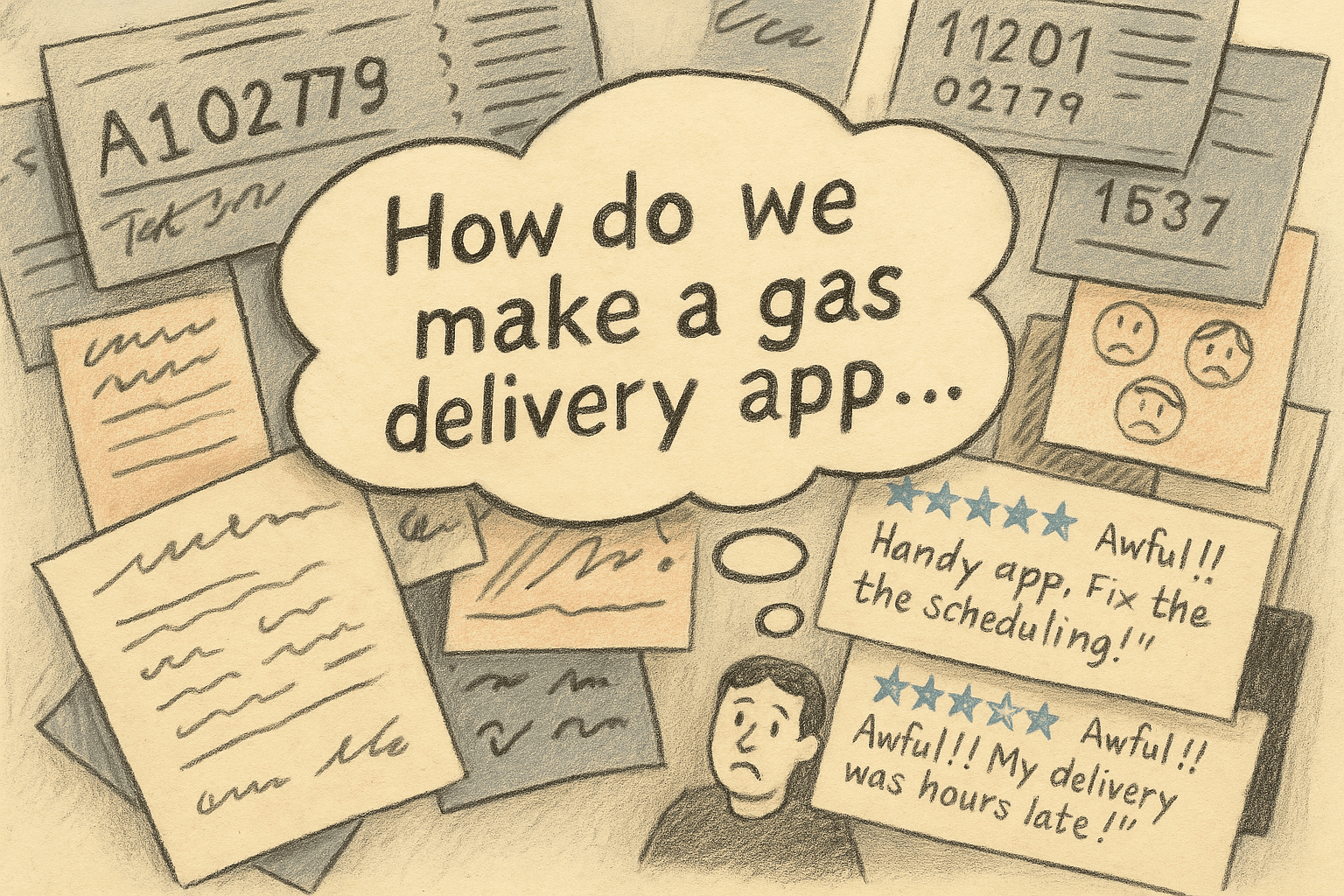
I started with what I had: Current app and the issues with it- from usability to user tickets, reviews on the Play Store, vague stakeholder requests, and one burning question:
How do we make a gas delivery app...feel like more than a gas delivery app?
I sat with this. Then I dug.
The Research
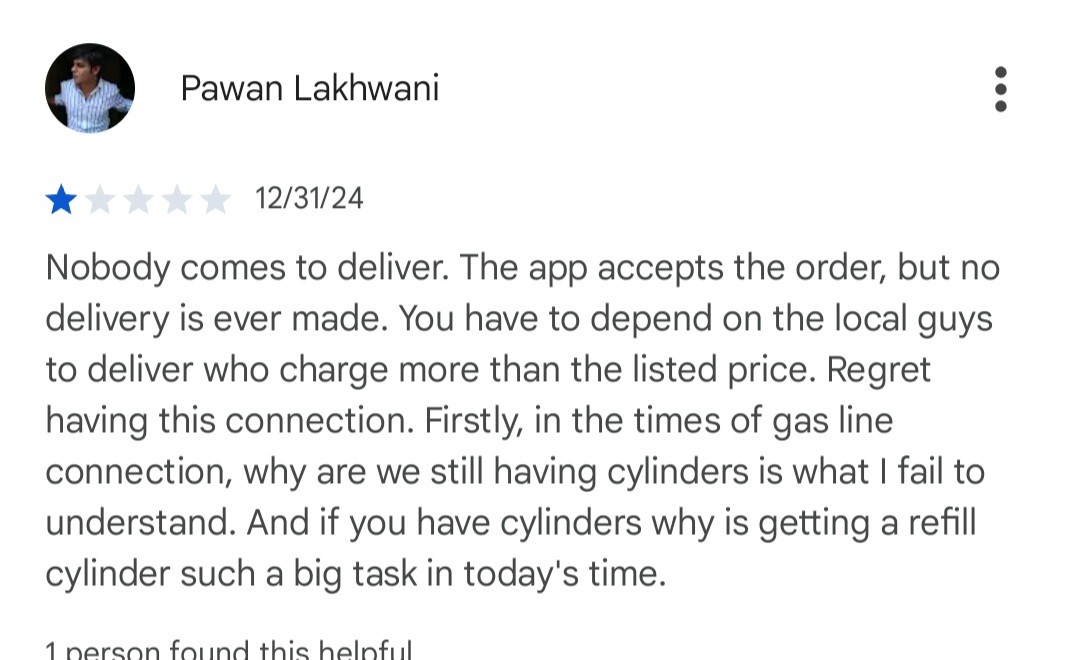
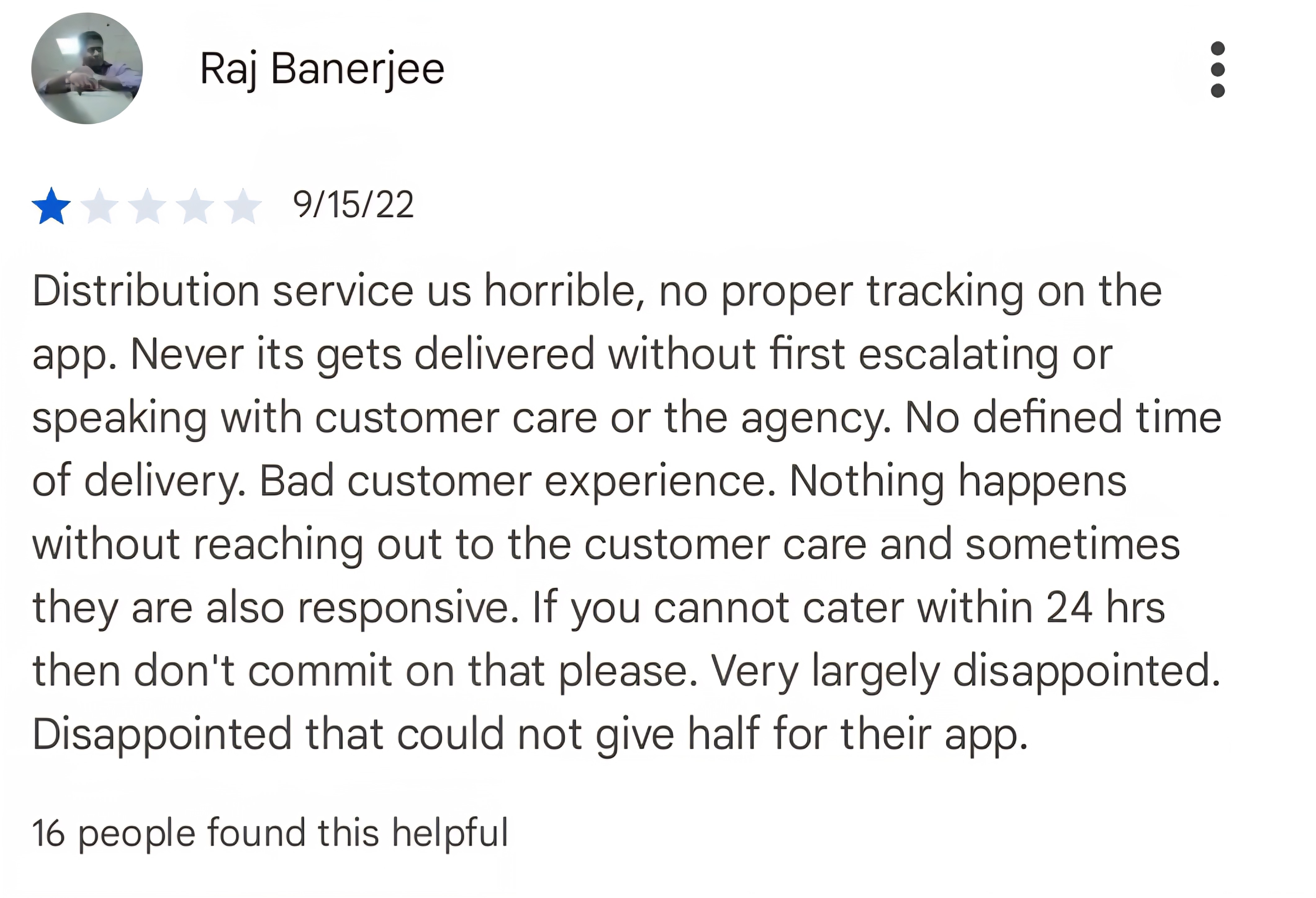
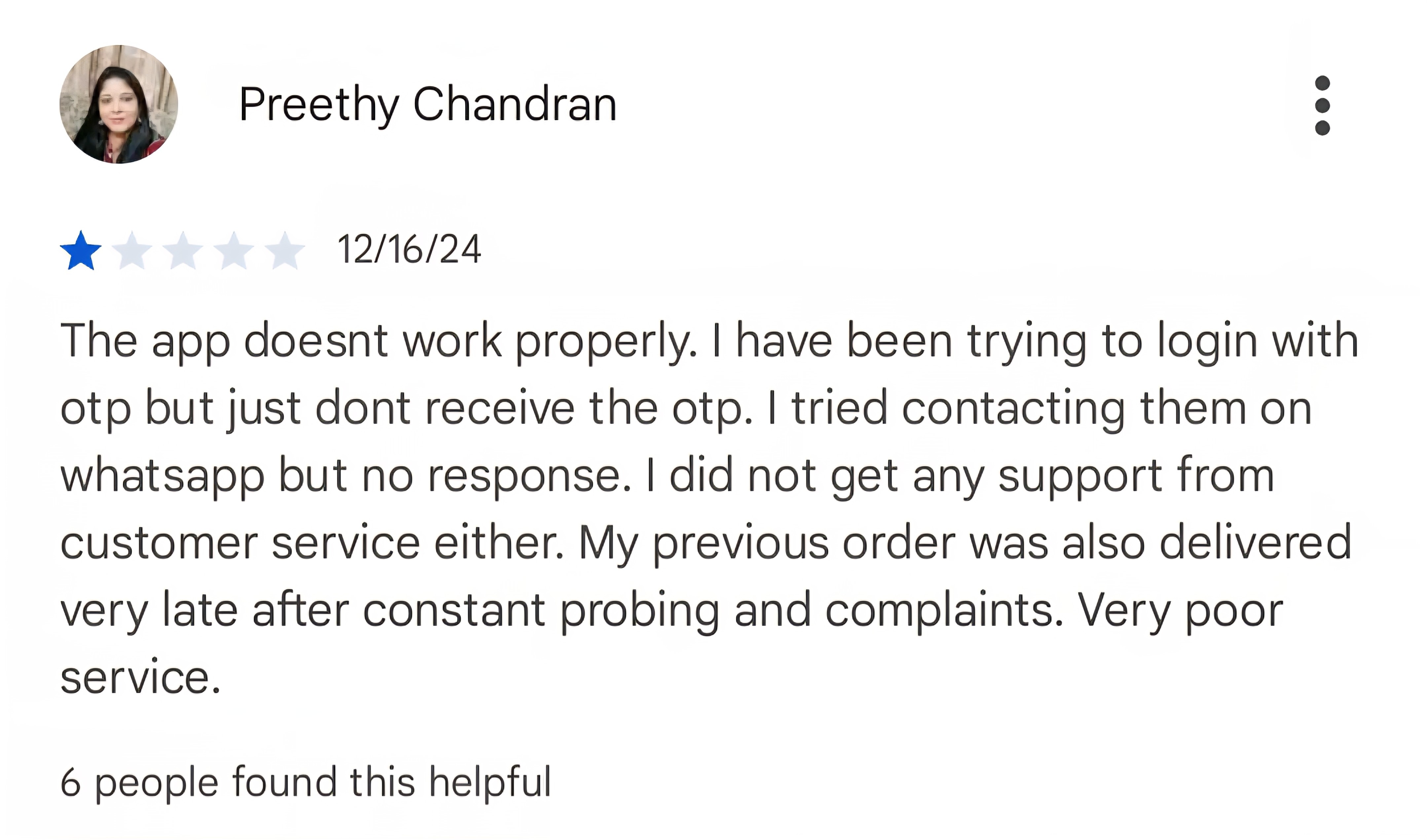
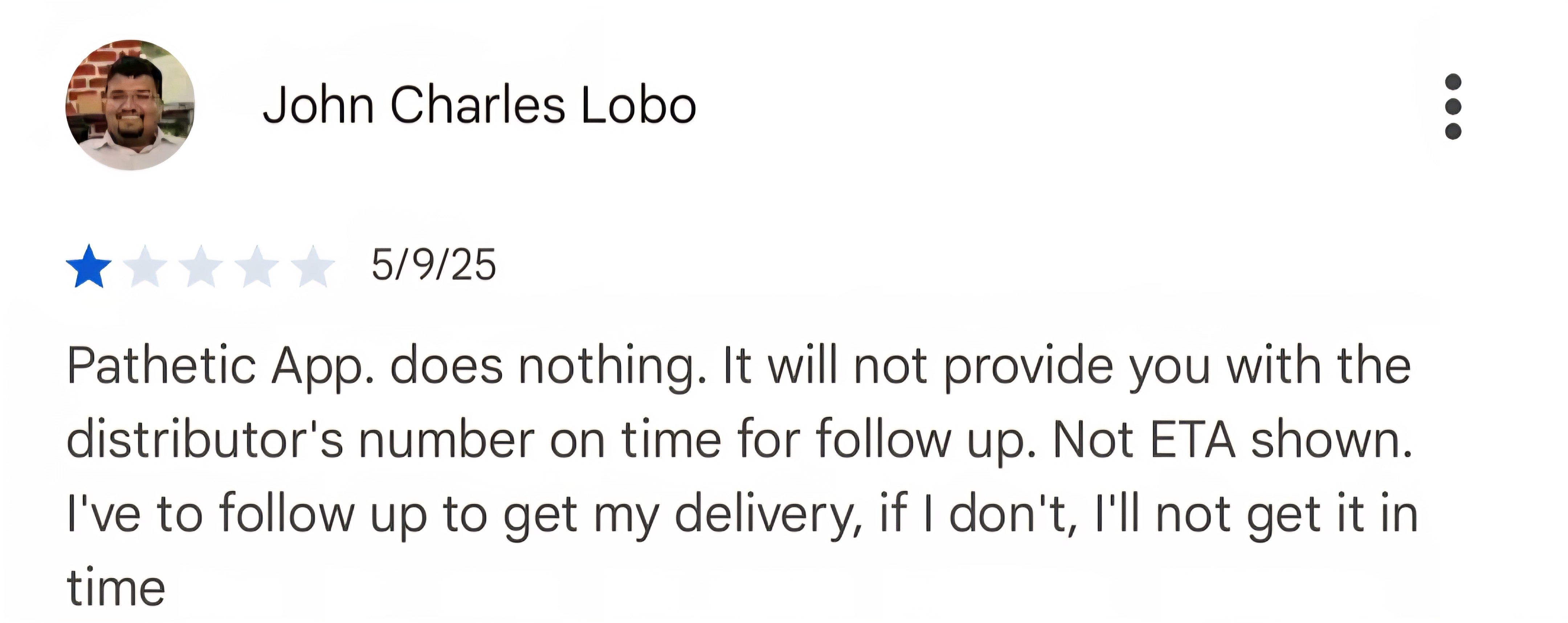
I took to user reviews. Lot of them -
Some frustrated. Some confused. All of them human.
What kept surfacing:
Uncertainty around delivery time and agent info
Repeat users had to enter the same data again
Abrupt interruption in the flows, leading to Confusion
No transparency in pricing and payment method
Unawareness of the safety issues using unreliable or black-market sources
Design audit
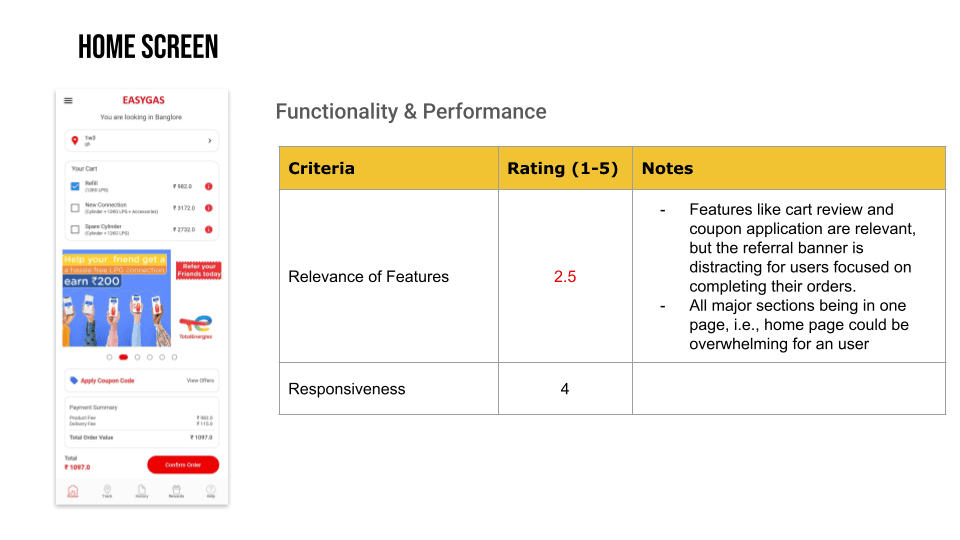
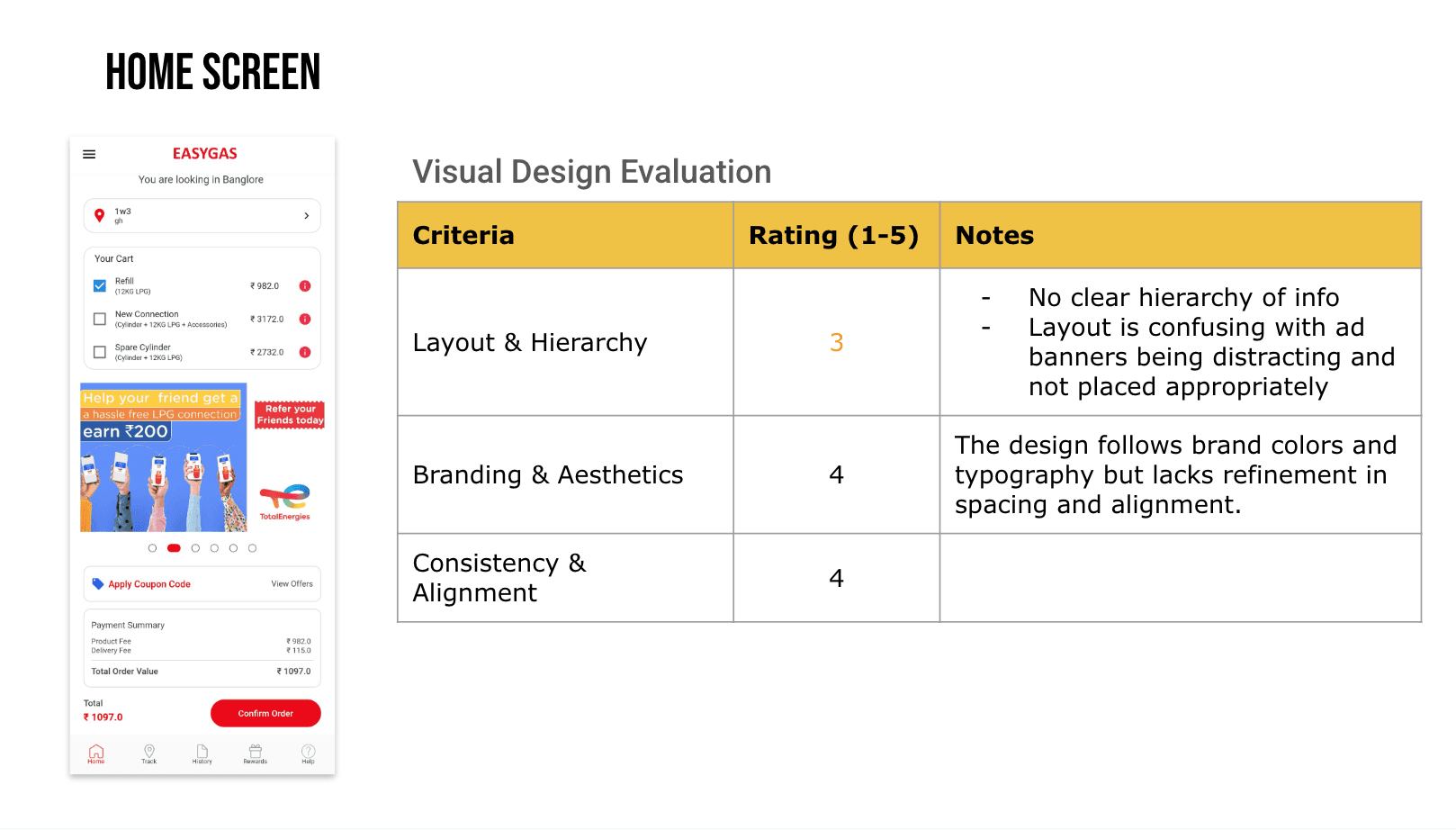
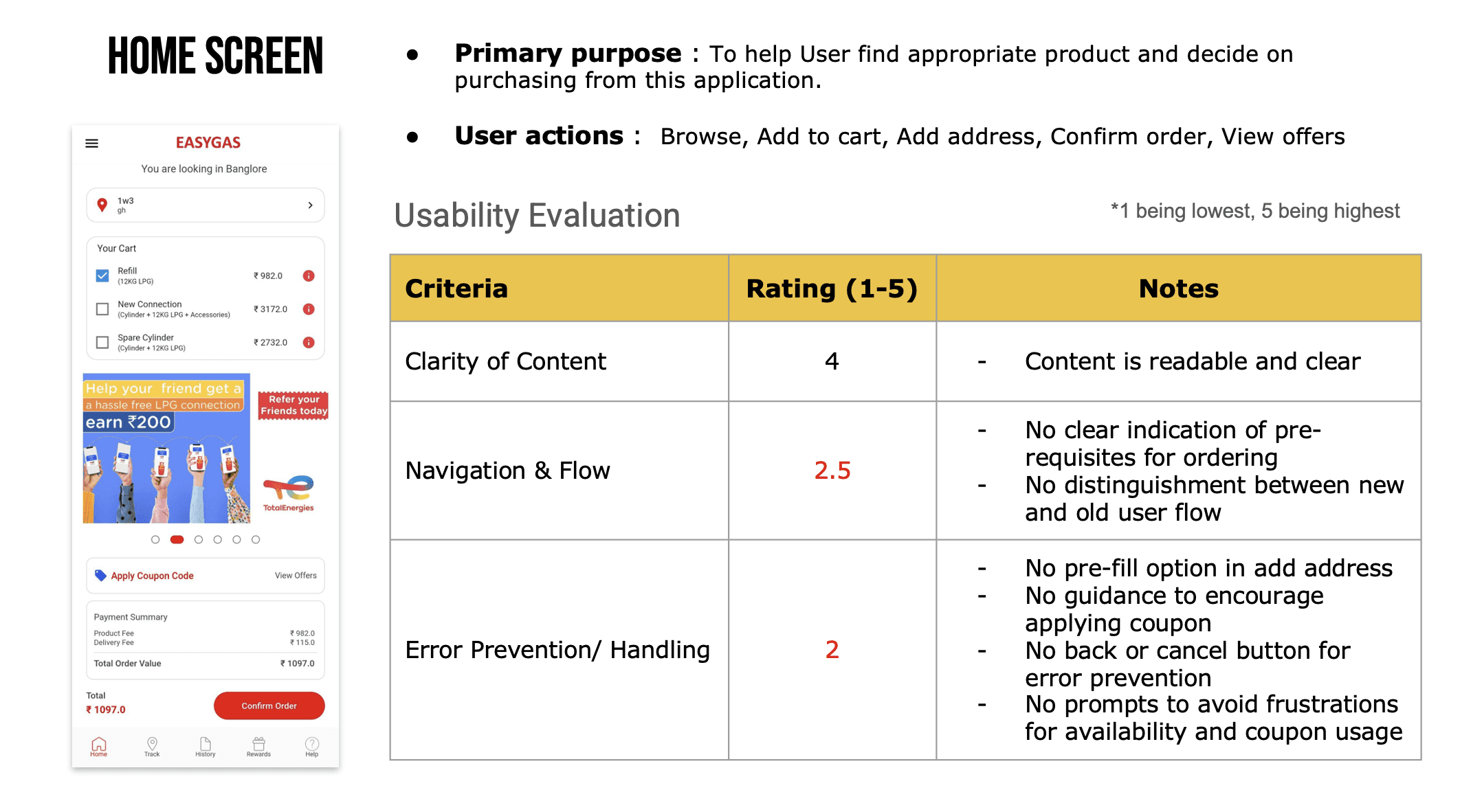
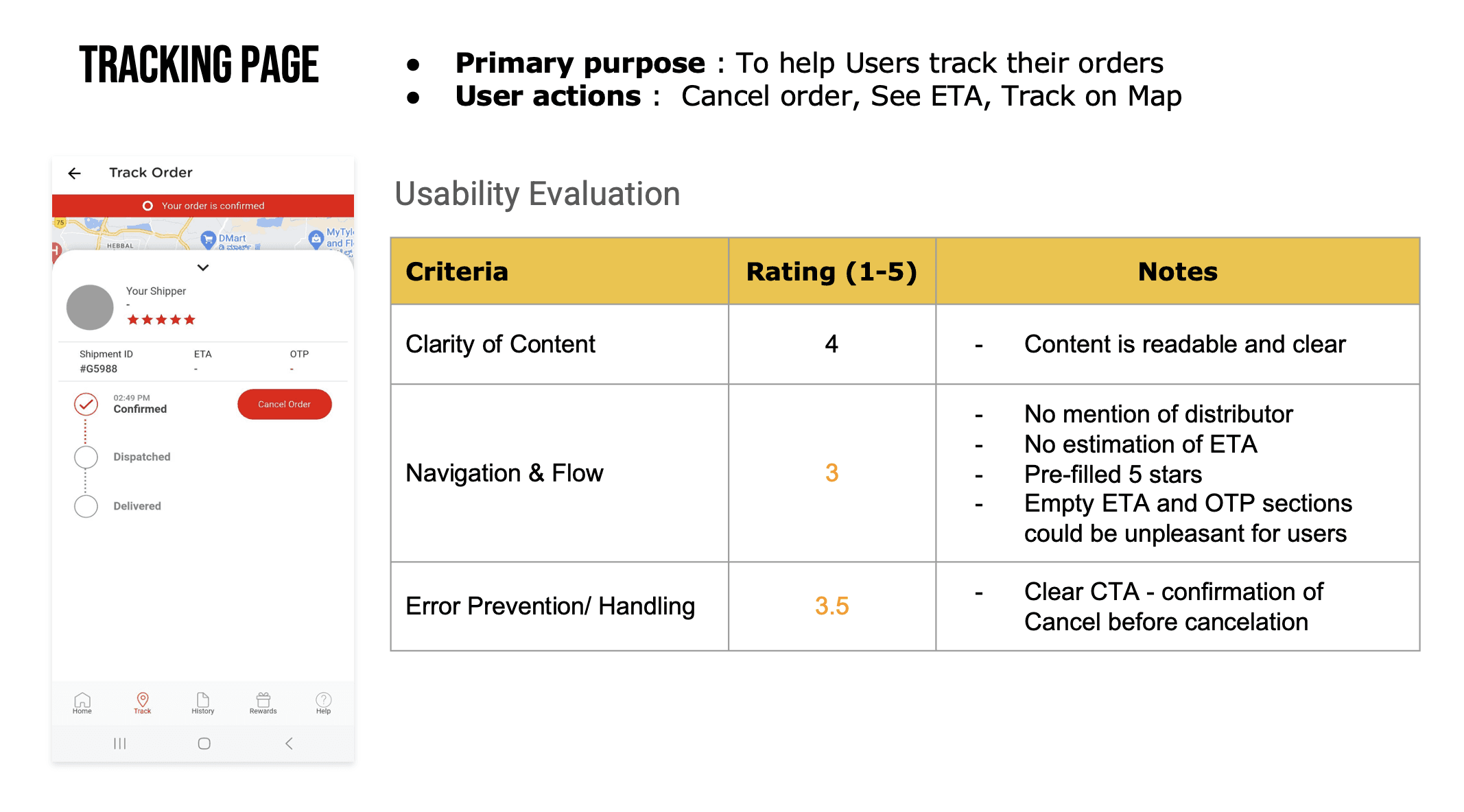
I meticulously conducted a design audit of the current application, I analyzed its functionality, visual design, and usability.
The audit revealed that the user experience was often disrupted by a confusing navigation flow, a lack of clear error-handling, and a requirement for repeat users to re-enter the same information.
These insights confirmed what users were feeling, allowing me to pinpoint specific design opportunities to make the app more intuitive and reliable.
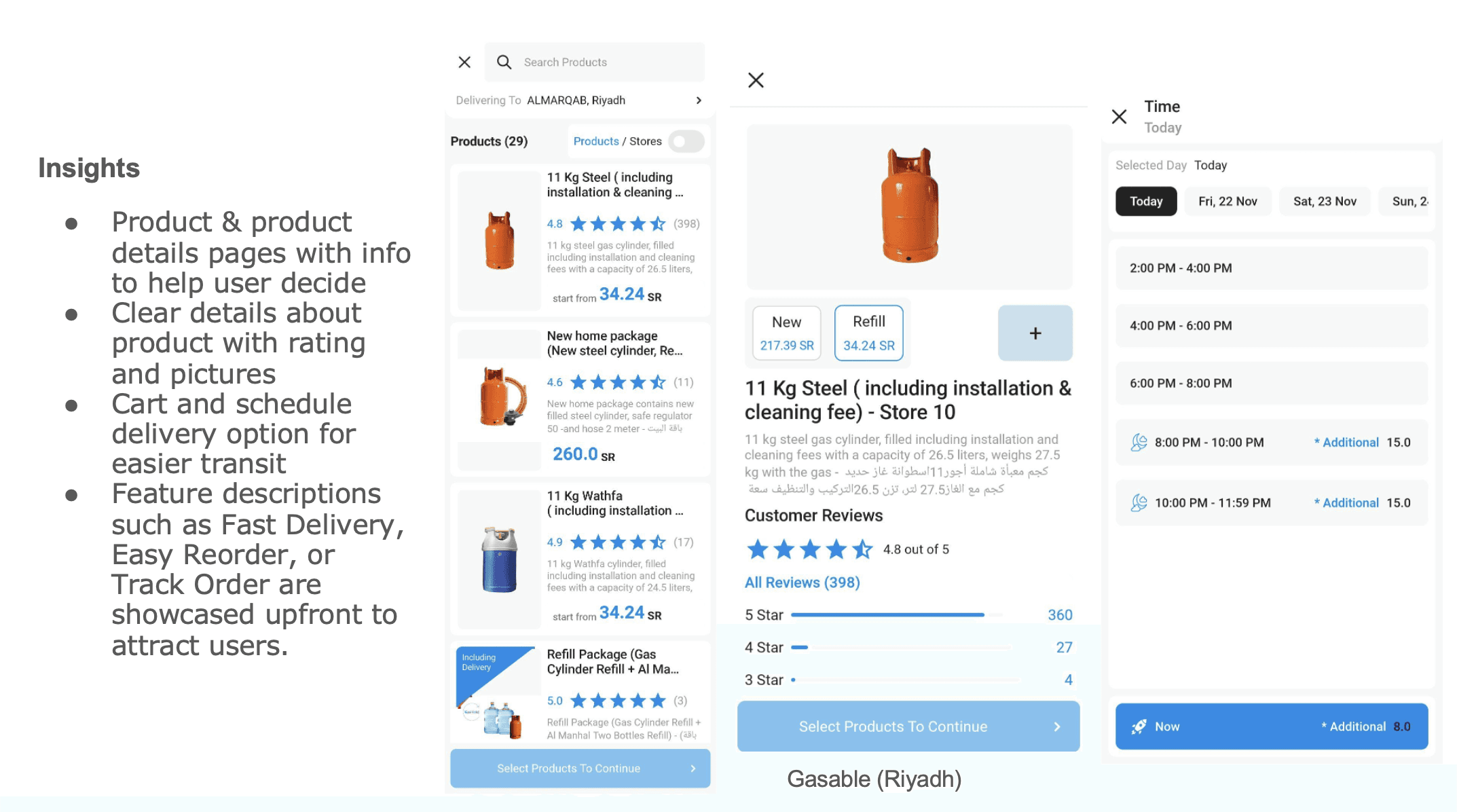
Competitor benchmarking
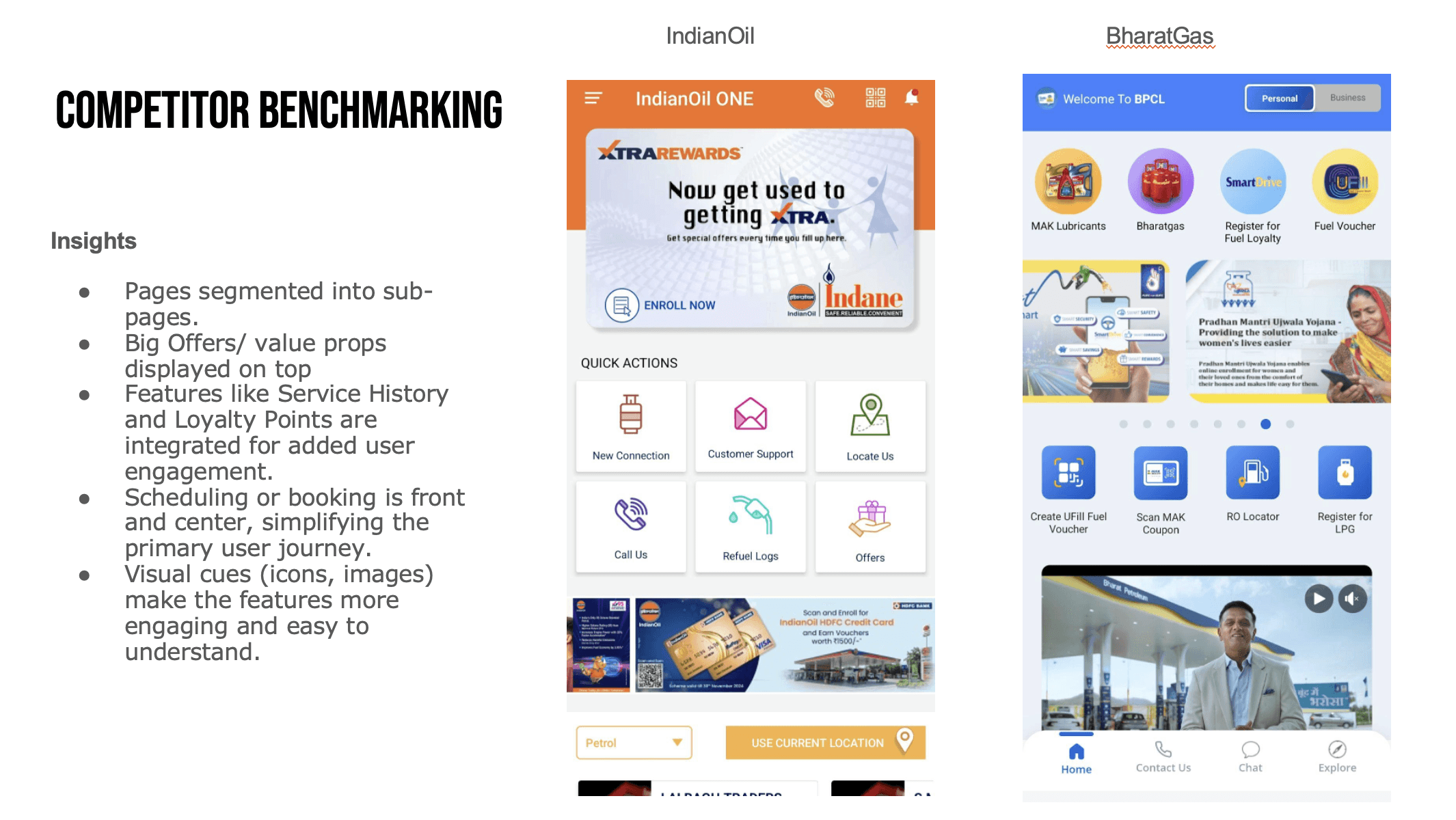
My competitor benchmarking analysis involved examining leading gas delivery apps to identify key design patterns and features.
My analysis highlighted some critical insights:
Product and service details are showcased upfront. This includes clear product ratings, pictures, and features like "Fast Delivery" to help users make quick decisions.
The user journey is simplified through thoughtful design. Competitors use visual cues like icons and images to make features more engaging and understandable.
Features that build trust and loyalty are integrated. This includes service history, loyalty points, and upfront scheduling options to give users more control and transparency.
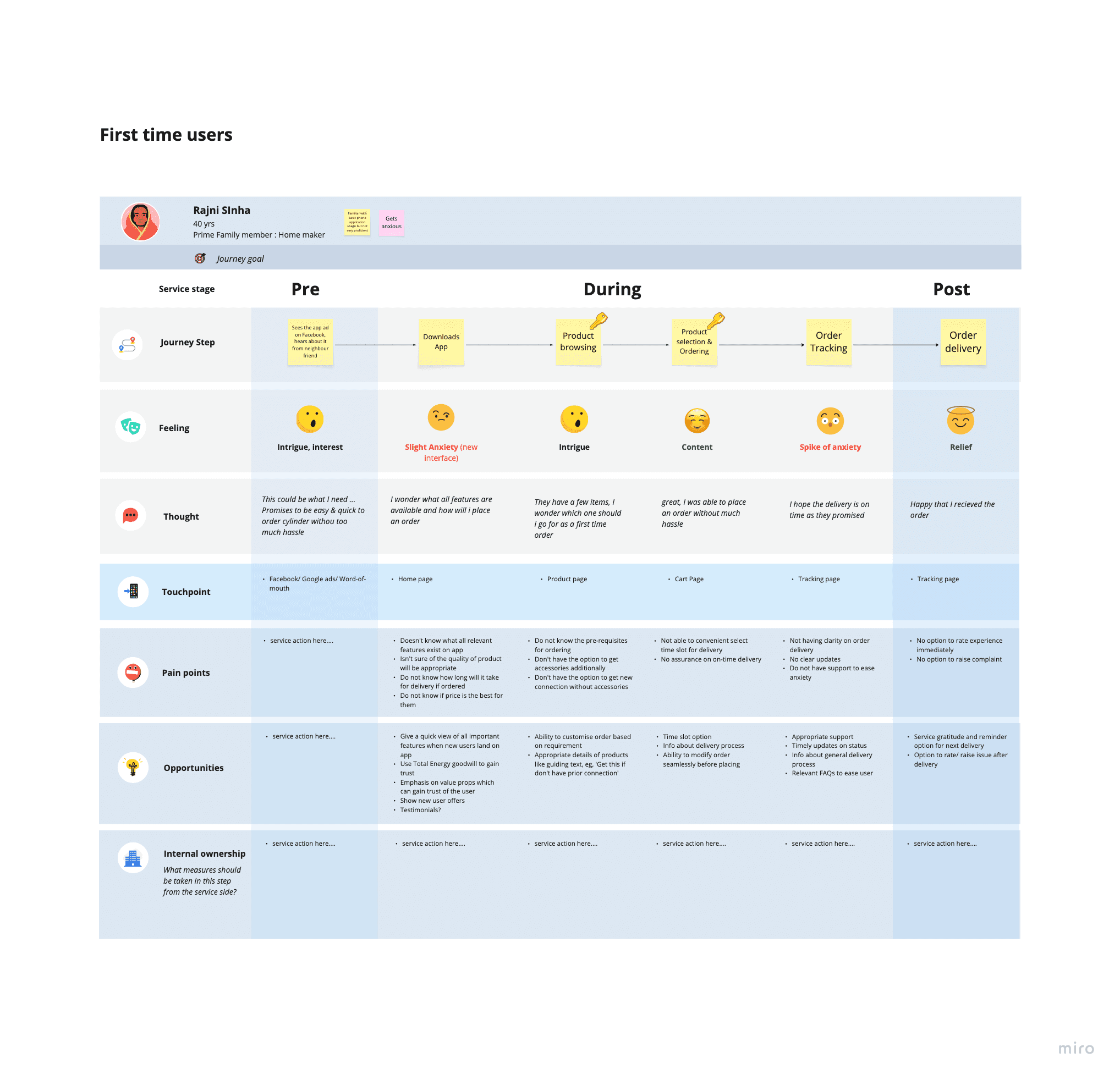
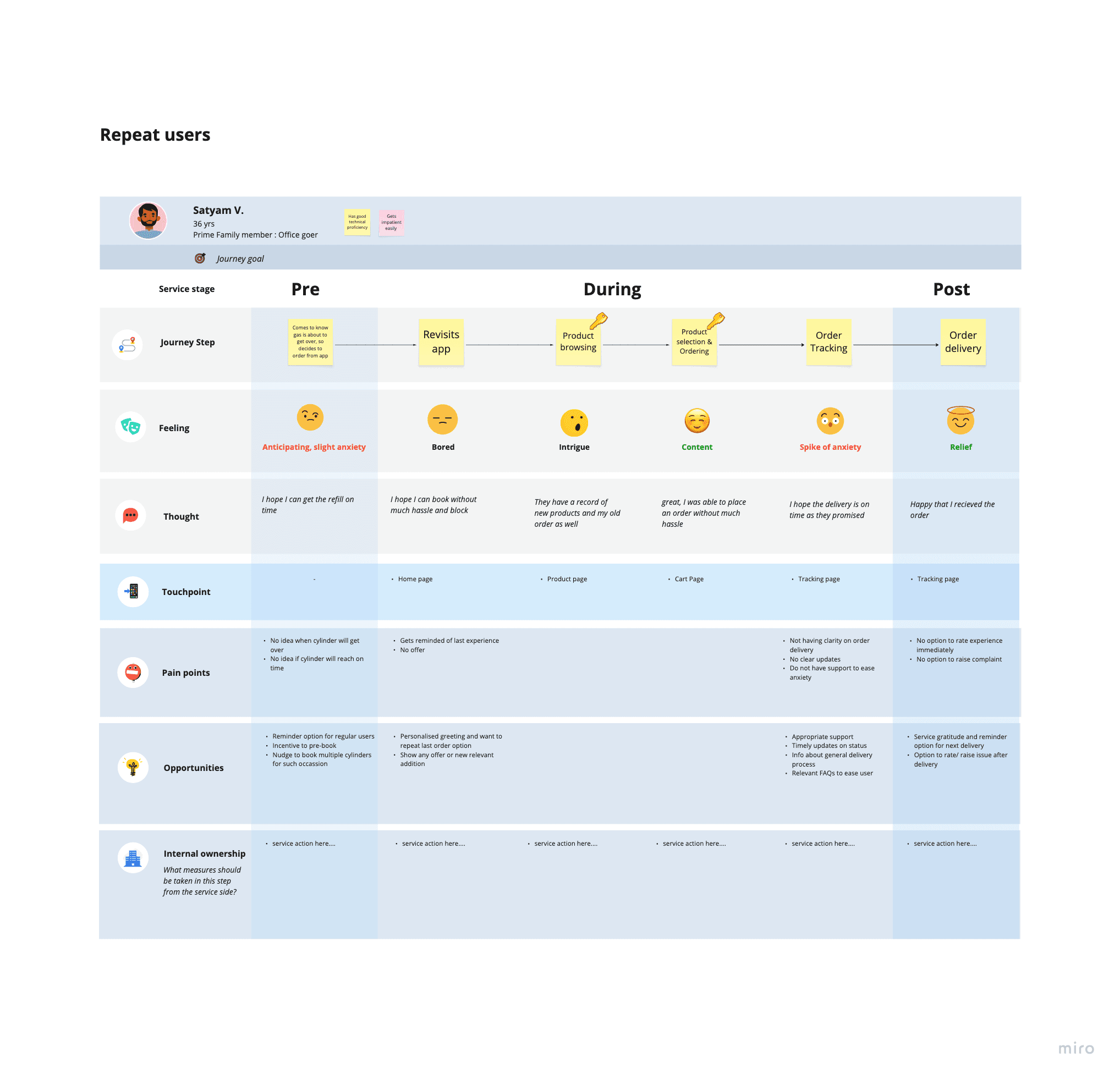
With stakeholders on one side and ambiguous flows on the other, I initiated a journey mapping sprint.
I mapped:
• A new user’s onboarding journey
• A regular user’s refill flow
Then we layered frustrations, gaps, and moments of potential delight. Every post-it, every dead-end in the map revealed something.
The Findings
Surface problem: Users are hesitant to order gas cylinders through the app.
Users drop off mid-flow or take too long to complete a task.
Every extra tap, ambiguous message, or poor interaction adds a drop of mental fatigue. Reduce it.
Users are hesitant to order gas cylinders through the app.
Design should communicate reliability, certification, and quality assurance upfront. Trust seals, verified vendor badges, and subtle microcopy like “Safety guaranteed by certified partners” can go a long way in easing this anxiety.
Users complain about delays, or are reluctant to order again.
Design should close this loop. Transparency and proactive updates can bridge the trust gap. Humanize the experience with delivery details, real-time tracking, and simple receipts.
The Problem Behind the Problem
Sure, users wanted to order cylinders faster.
But beneath it all, they wanted reliability.
They wanted to know:
• Is this cylinder safe?
• Will it arrive on time?
• What if I miss the delivery?
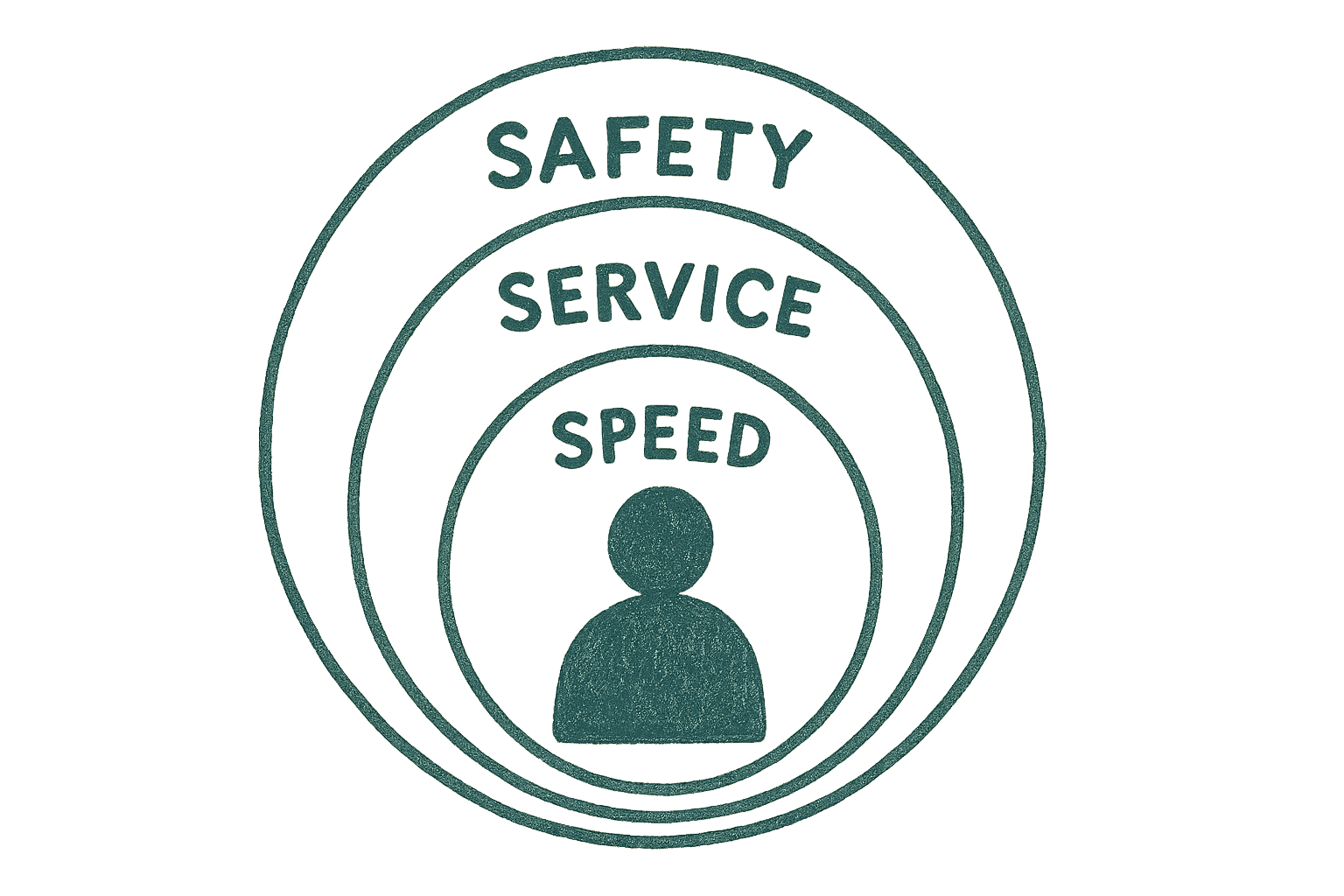
We didn’t need to just be "easy".
We needed to be dependable. Human. Clear.
That clarity shaped our north star-
Design a system where users feel safe, seen, and served.
Not just processed.
I simplified the interface. Minimalism with purpose.
Every tap led to something expected. No surprises unless they were delightful.
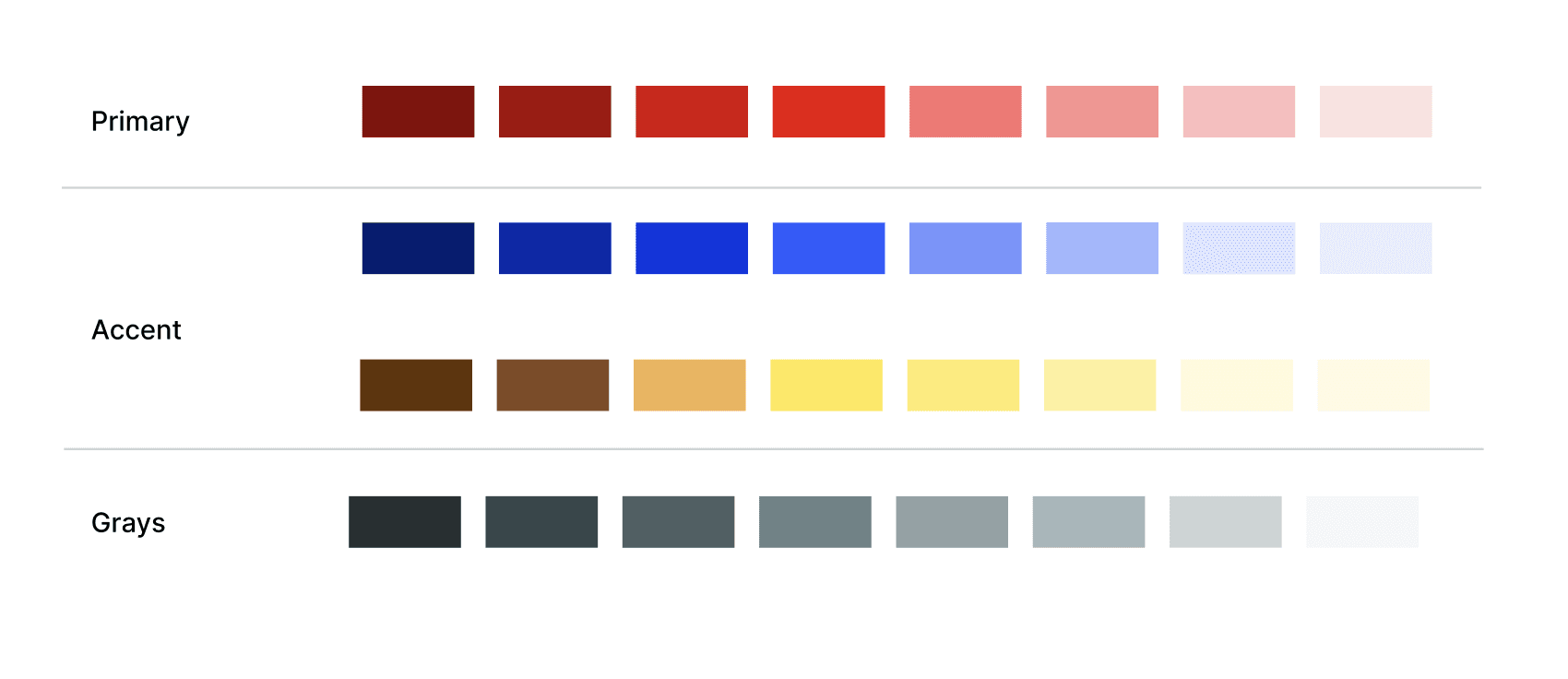
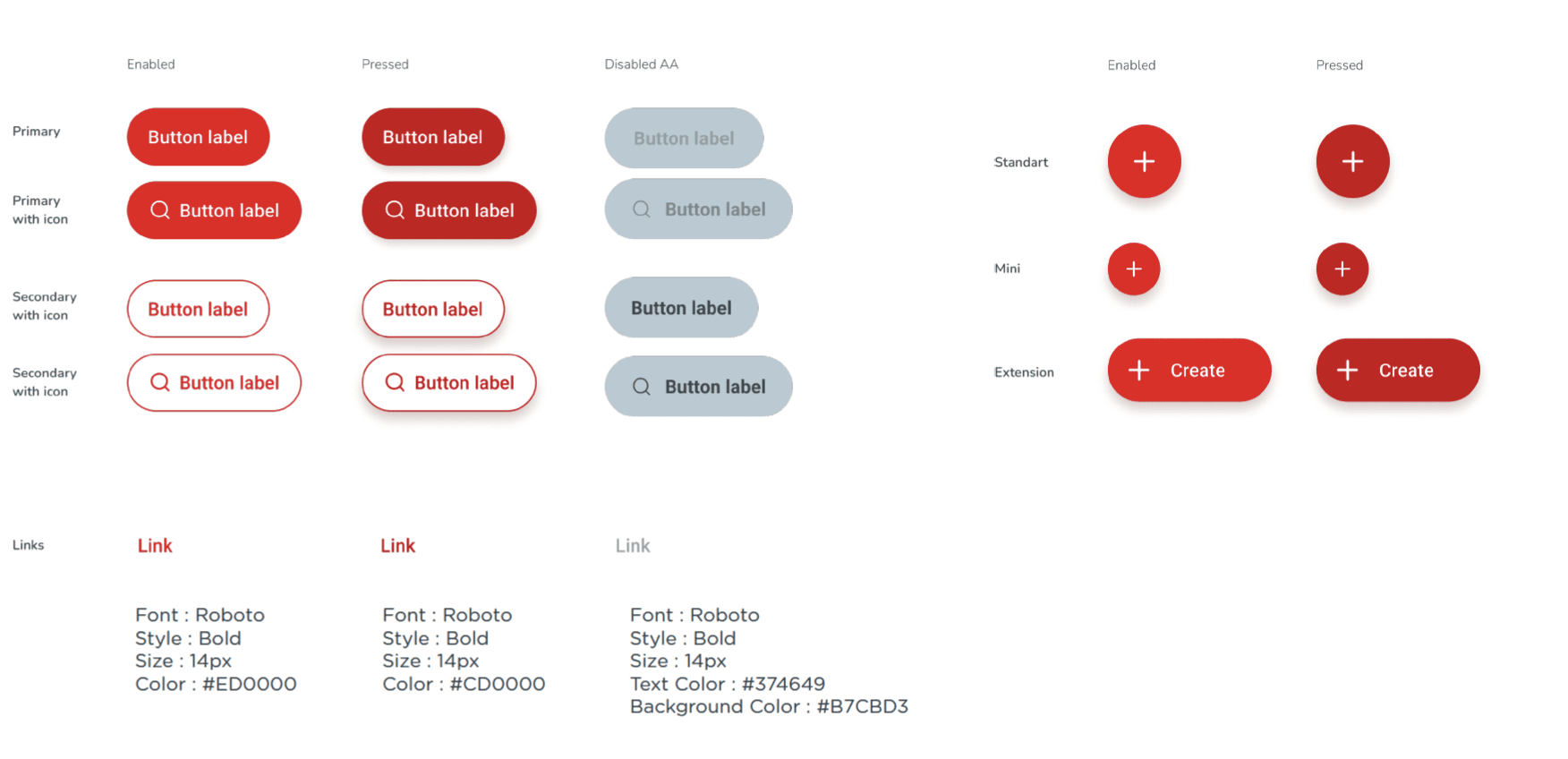
CTAs used our red brand color, but we dialed down the harshness with thoughtful shadows and soft corners
Visual hierarchy was used to nudge clarity — bold for actions, grey for guidance
Before:
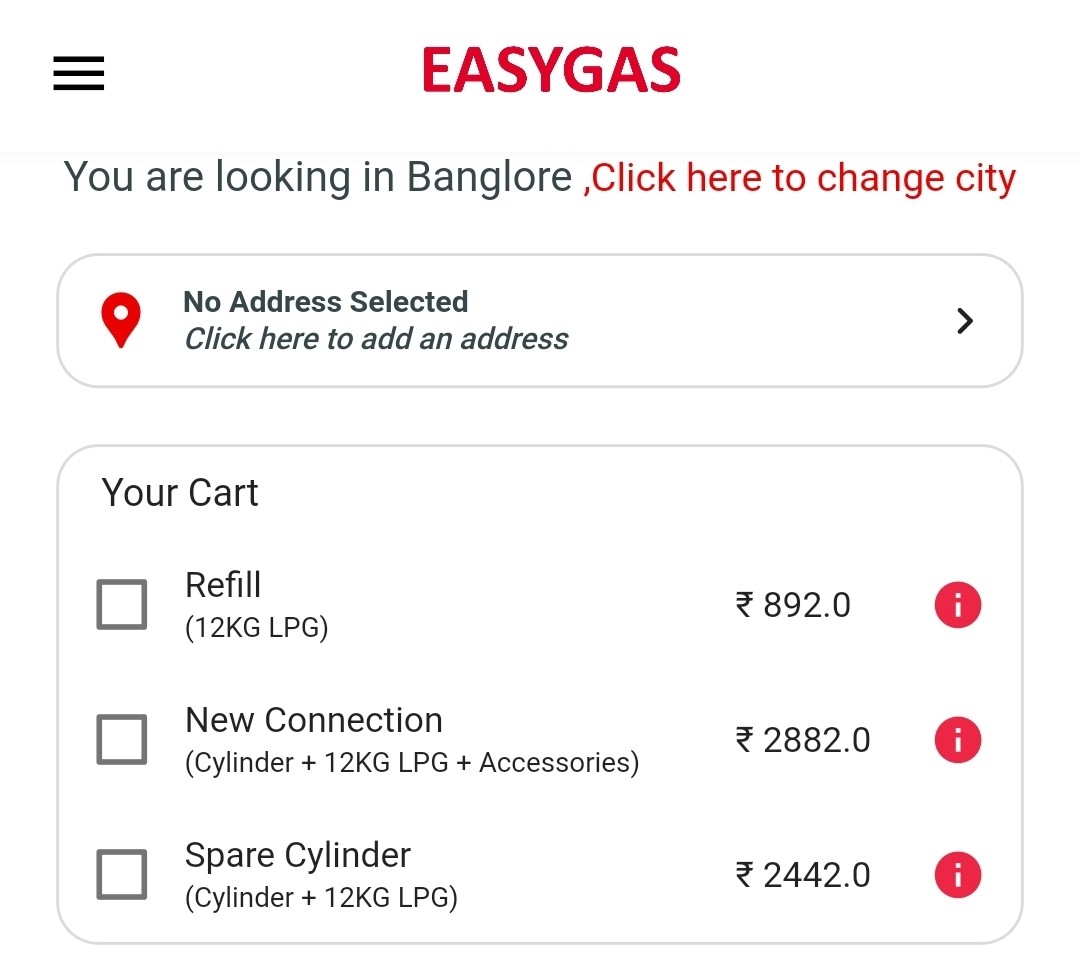
Cluttered hierarchy -
Everything looked like the same “weight” (no clear primary action).
Low-contrast UI -
Buttons blended into the background, making CTAs less discoverable.
Minimal product clarity -
User sees “Refill” or “New Connection,” but no contextual info (safety, agent, delivery).
Empty space under-utilized -
It felt transactional, not reassuring.
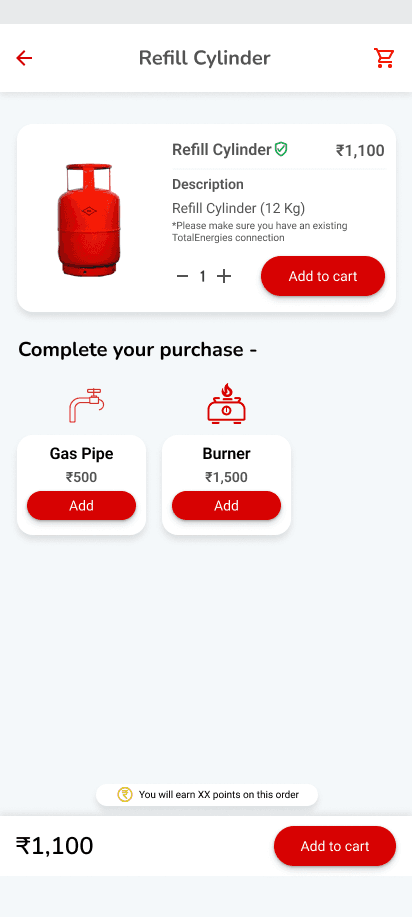
After:
Breathable layout -
More spacing between product, addons, and payment details.
Expanded order card -
Now shows ETA, agent photo, safety badge - addresses trust/fear.
Clear input guidance -
Plus/minus for quantity, visible breakdown of price components.
Reward points and offers surfaced smartly -
Adds delight and transparency without clutter.
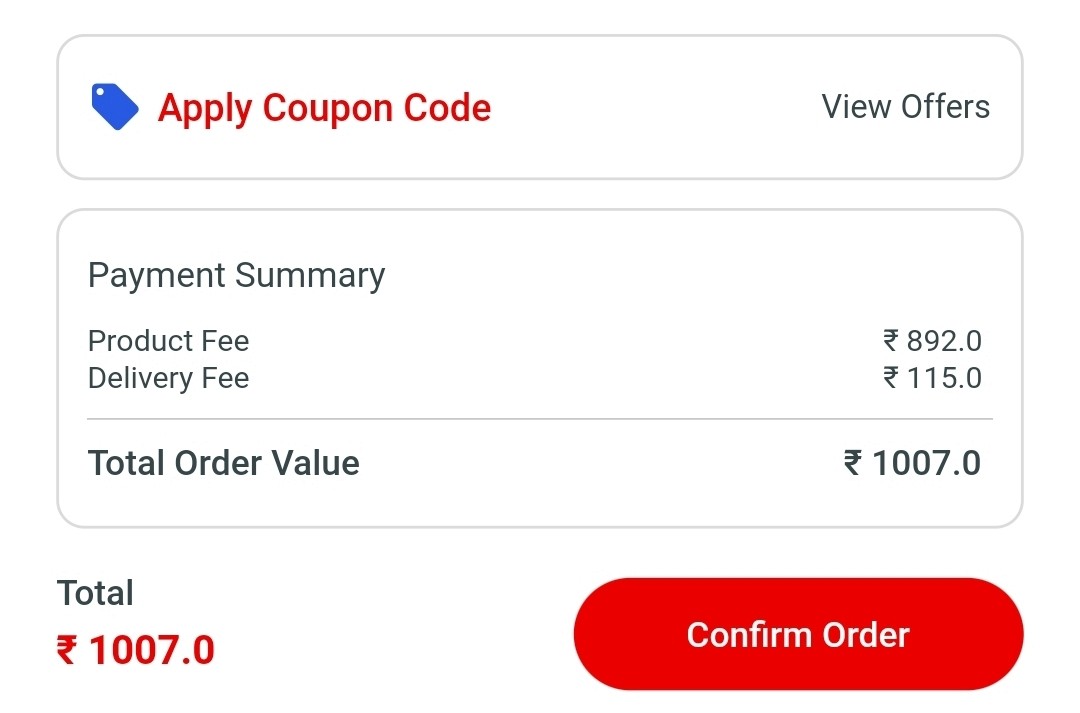
Before:
Compressed payment summary -
Fees lumped together without clarity.
Coupon flow hidden -
“Apply Coupon” looked static, not actionable.
Date/time slot not upfront -
Users had no visibility until late in the flow
Button treatment weak -
“Confirm Order” looked the same as secondary UI.
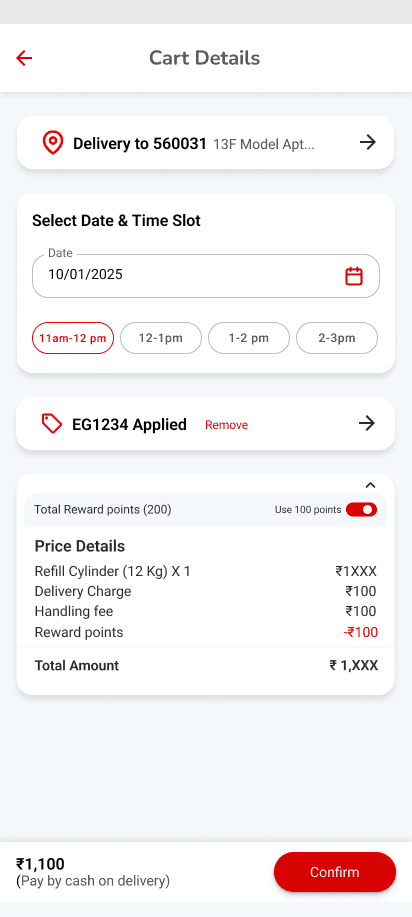
After:
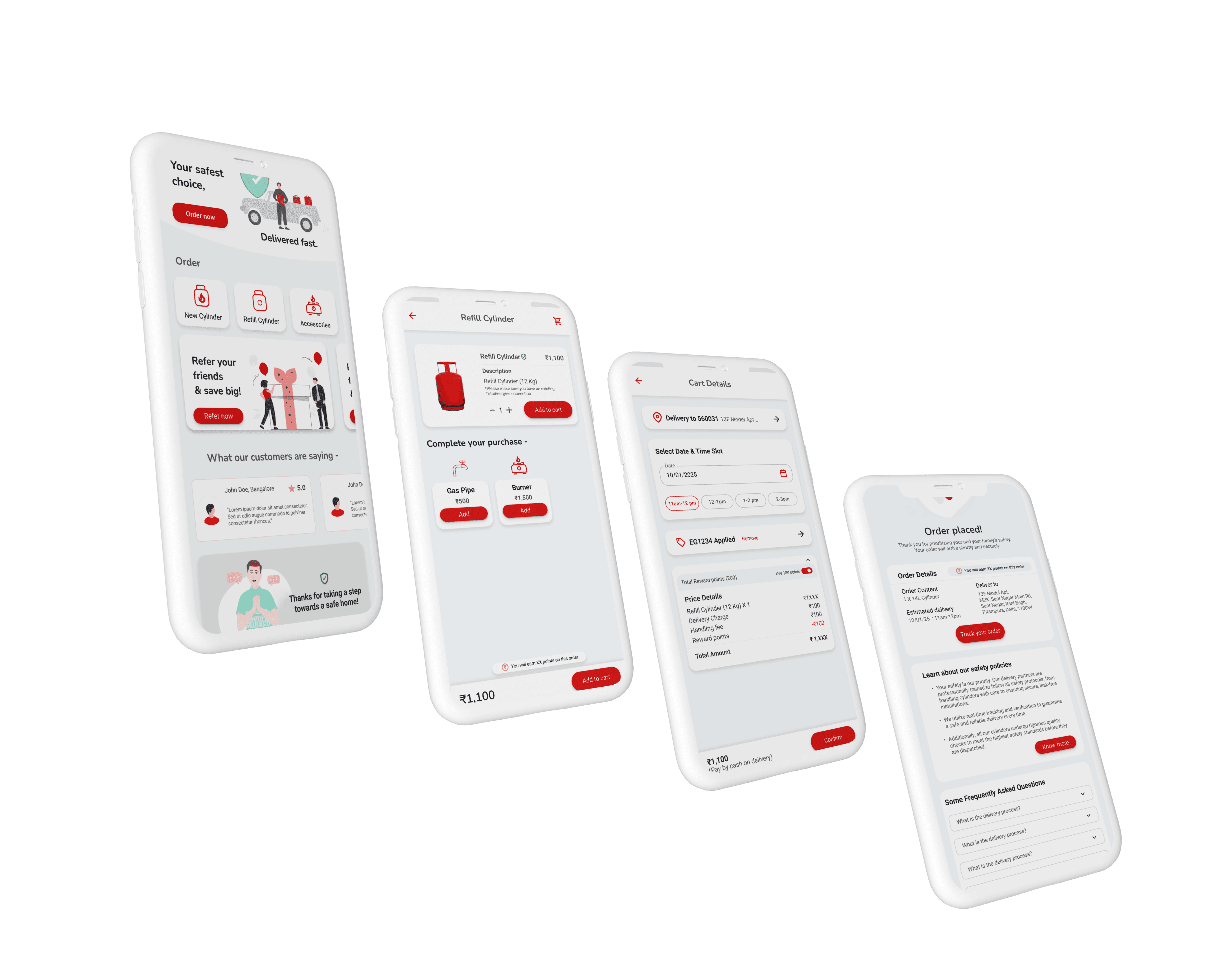
Clear slot selection -
Delivery date + time picker is visual, reducing ambiguity
Transparent breakdown -
Item cost, delivery charge, handling fee, rewards → easy mental math.
Coupon applied visibly -
EG1234 shows up in-line with a remove option (builds trust).
Cash on Delivery option surfaced
Reassures first-time or less tech-comfortable users.
I tried to interject subtle interventions as an effort to create the feeling of trust, warmth and credibility into the flow:
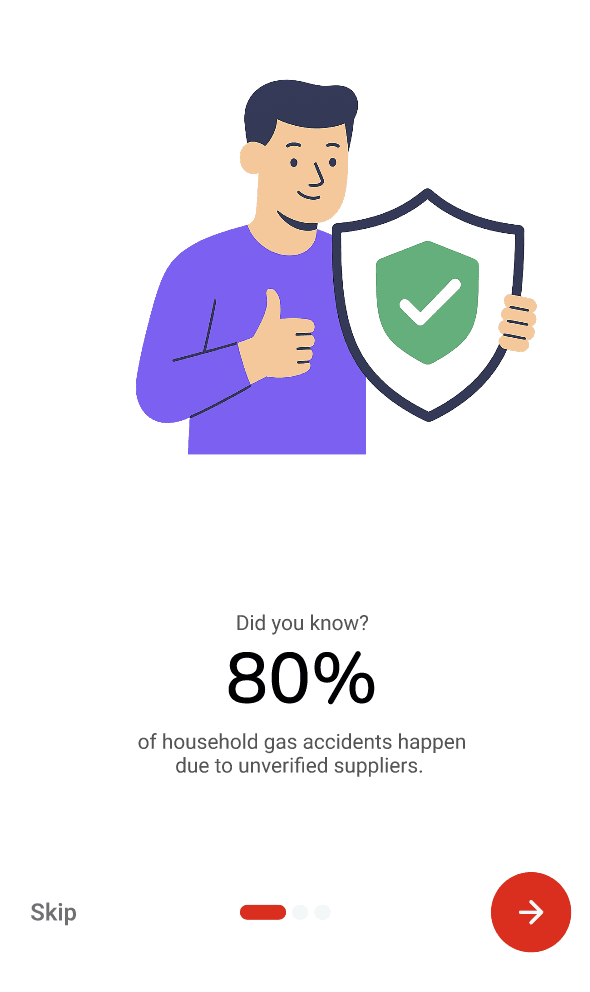
Onboarding- A message based on facts :
Did you know 80% of household gas accidents happen due to unverified suppliers.
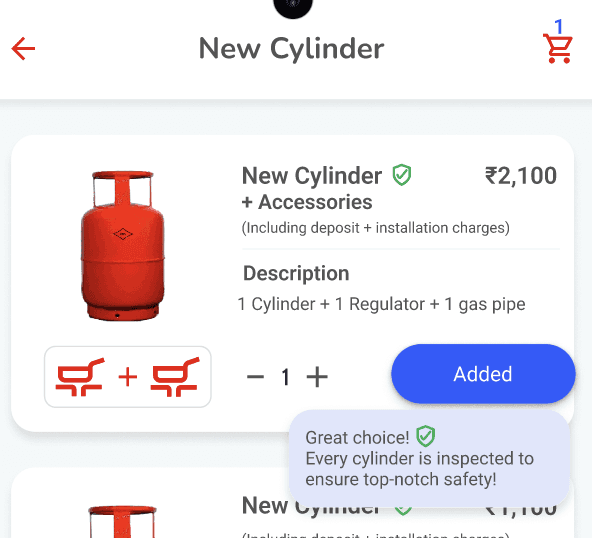
I positive prompt after a product is added to the cart:
"Great choice!
Every cylinder is inspected to ensure top-notch safety!"
After checkout: A tiny affirmation that reads:
"Thank you for choosing safe energy."
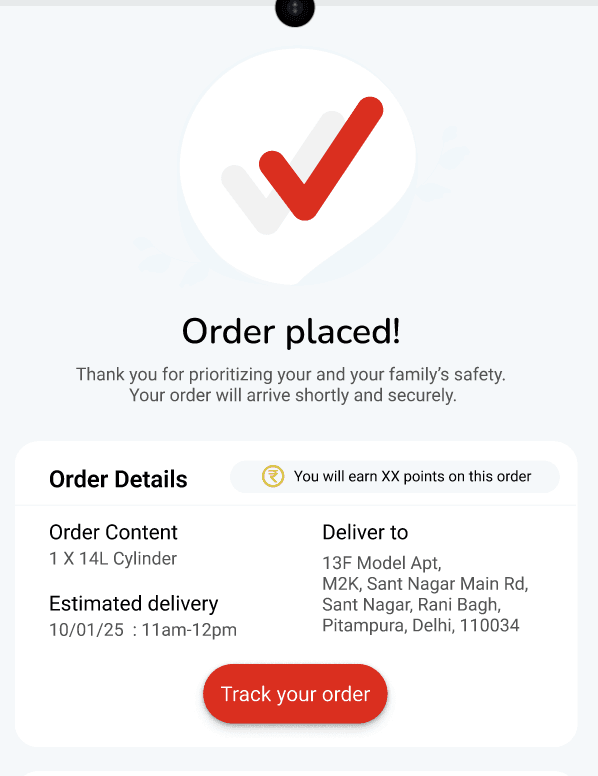
A line under "Order Placed":
Thank you for prioritizing your and your family’s safety.
Your order will arrive shortly and securely.
I redesigned by keeping in mind :
A clean onboarding with subtle brand storytelling
Smart form inputs that didn’t frustrate
A loyalty system that felt earned, not gimmicky
A homepage that didn’t scream “sales” but whispered “reliability”
Onboarding flow
Splash screens speak to safety and reliability from the first tap. A safety stat and brand partnerships set the tone and build trust.
Login is faster. A phone number and OTP replace lengthy forms, cutting friction and getting users inside quickly.
Only essentials are asked upfront. A “Continue as guest” option lowers the barrier, letting curious users explore without pressure.
My Subscription & Order tracking
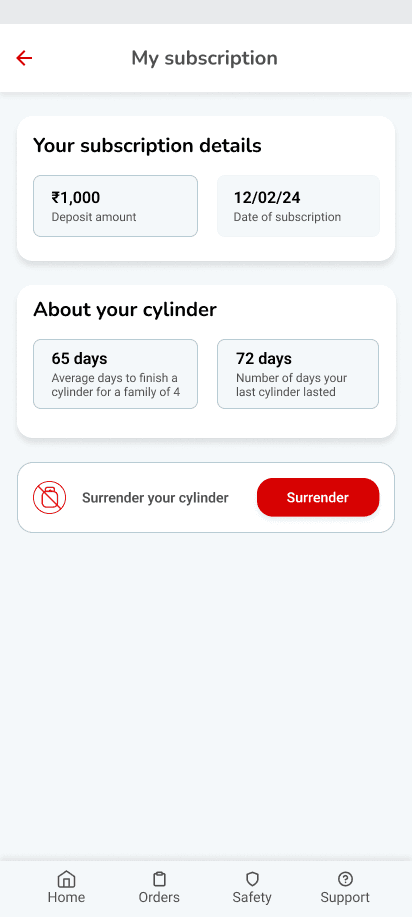
A subscription page that shows not just a deposit, but a sense of ownership - with details like how long a cylinder has been in use.
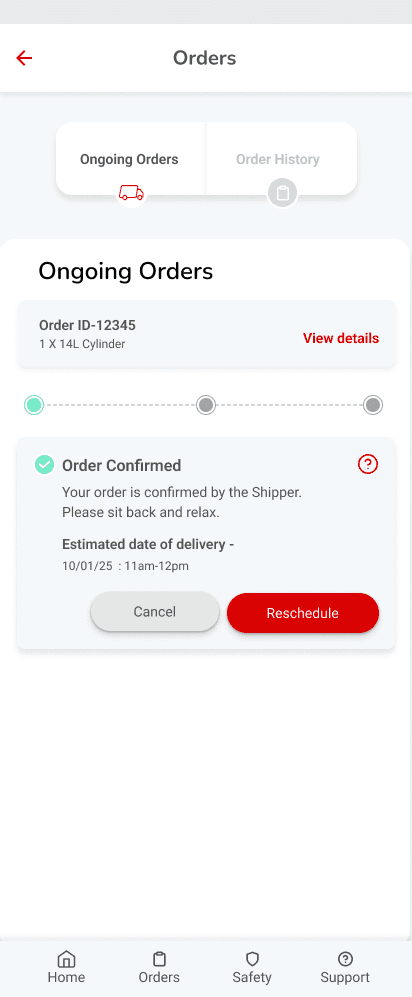
An orders page that keeps users in the loop : real-time status, clear delivery dates, and fewer unknowns.
Simple controls like “Reschedule” and “Cancel” that hand power back to the user, making the flow flexible instead of rigid.
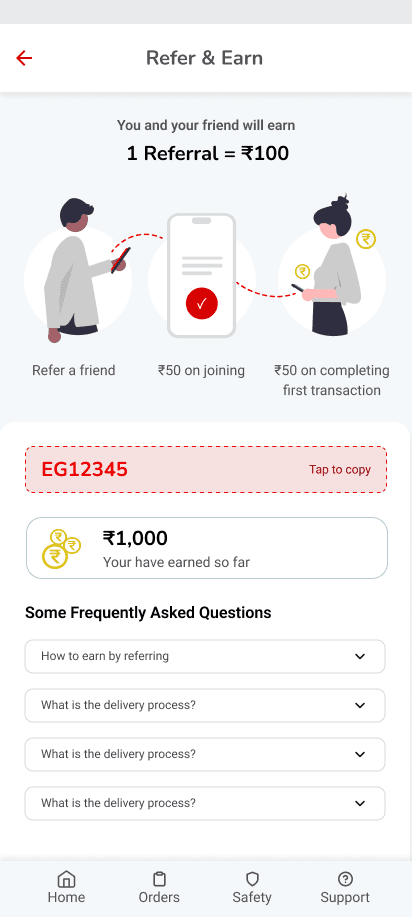
Rewards, Refer & Earn pages
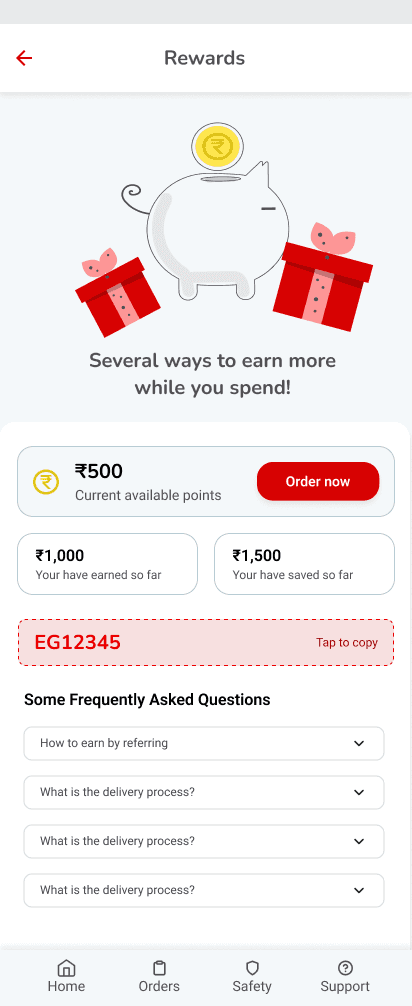
A rewards page that motivates, not overwhelms
A clear split between “Refer & Earn” and “Rewards” for easy navigation
Points and benefits surfaced upfront to spark engagement
Action-oriented CTAs that guide, not confuse
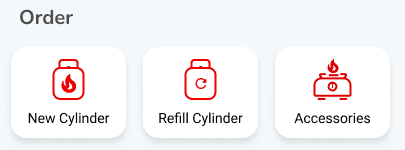
Product categories are now split into clear icons -
New Cylinder, Refill, Accessories. Navigation feels simpler. The cart is lighter. Users find what they need without effort.
Visuals carry the safety story.
Strong imagery and small testimonials reassure. Safety and speed feel built into the experience.
Social proof supports it. Ratings, reviews, and snippets of customer voices build confidence with new users.
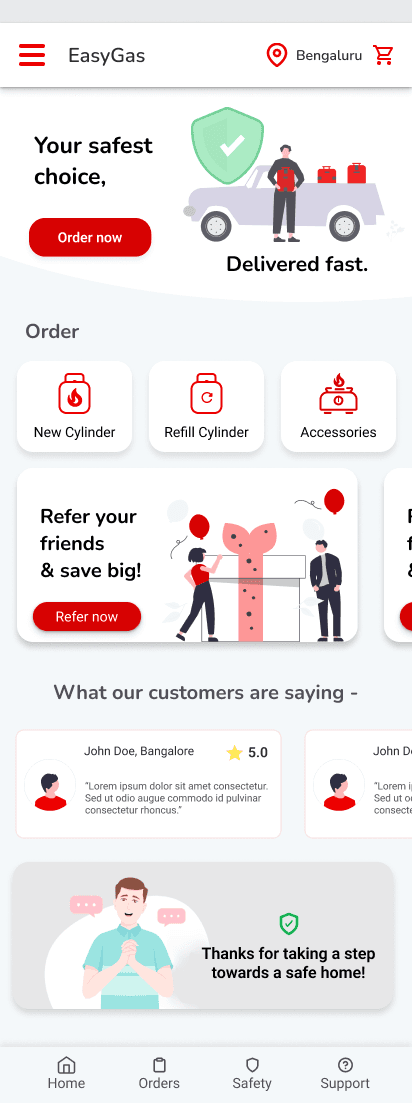
The old cart-as-homepage is gone. A logical flow takes its place. Browse first, add later. The journey now mirrors familiar e-commerce patterns.
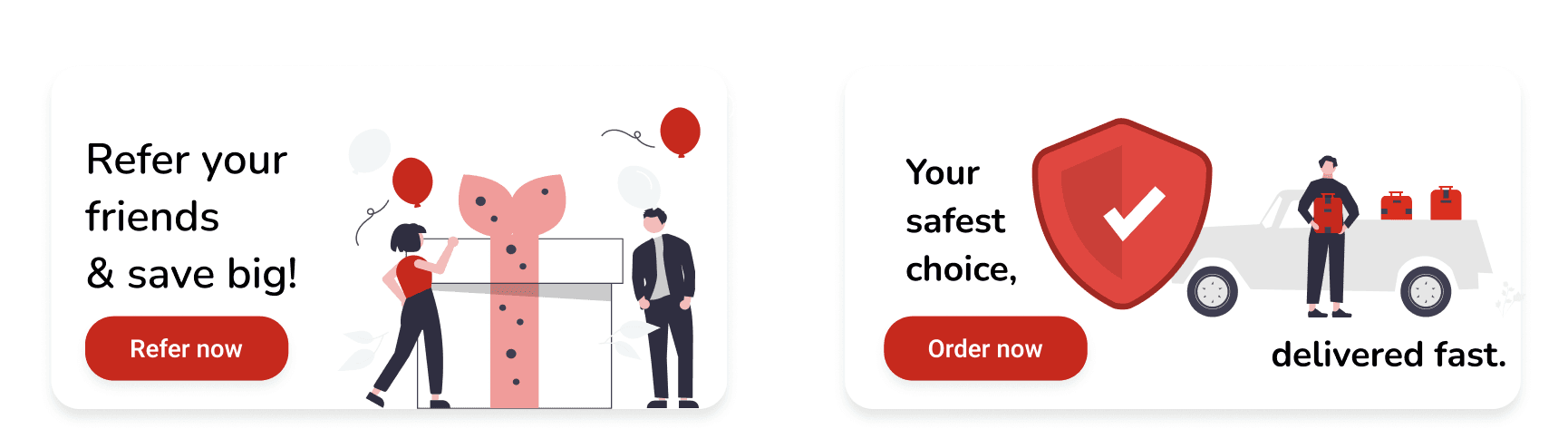
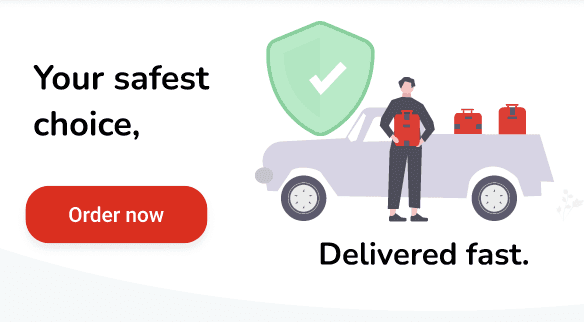
The value is upfront: “Your safest choice, delivered fast.” A headline that answers fears of safety and delivery speed. Trust, from the first tap.
Interaction is simplified. A single “Order now” button leads the way. One clear action, no clutter, no confusion.
The project is still evolving. There’s no ribbon-tied ending. But the redesigned app now:
• Reflects a brand users can trust
• Supports a delivery flow that partners can manage
• Brings clarity to a chaotic process
Impact & learnings:
• Established a clearer product structure aligned with user expectations
Reduced cognitive load by separating discovery, selection, and checkout
Reinforced the importance of designing with mental models, not against them
Highlighted how clarity can be a stronger differentiator than novelty