
✦ Project: Service Design & Discovery
✦ My role: UX Designer (Research, synthesis, journey mapping, service blueprinting)
✦Context: Enterprise service design for a commercial real estate organisation
✦Outcome: Set of deliverables -
Competitor Analysis, User journey Maps, Key Persona Mapping, Service Blueprint, Collaborated UX product backlog solution themes
The initiation - Market research
We conducted an in-depth competitor benchmarking to understand the current market and industry before we proceed with our primary research.
Our main objectives of the study were-
Industry benchmarking
Emerging industry trends
Our client's industry positioning
Comparing apple-to-apple comparison for fucture roadmap


Insights-
Interesting trend observed on Research/ forecast led acquisitions
Disruptive tools were being used to cater to specific customers' demographic
More and more digital tools being used for automation- remove dependencies and error via paper work
Understanding the business
3 primary business lines
Investment sales
Debt & Equity
(Commercial financing)
Loan servicing
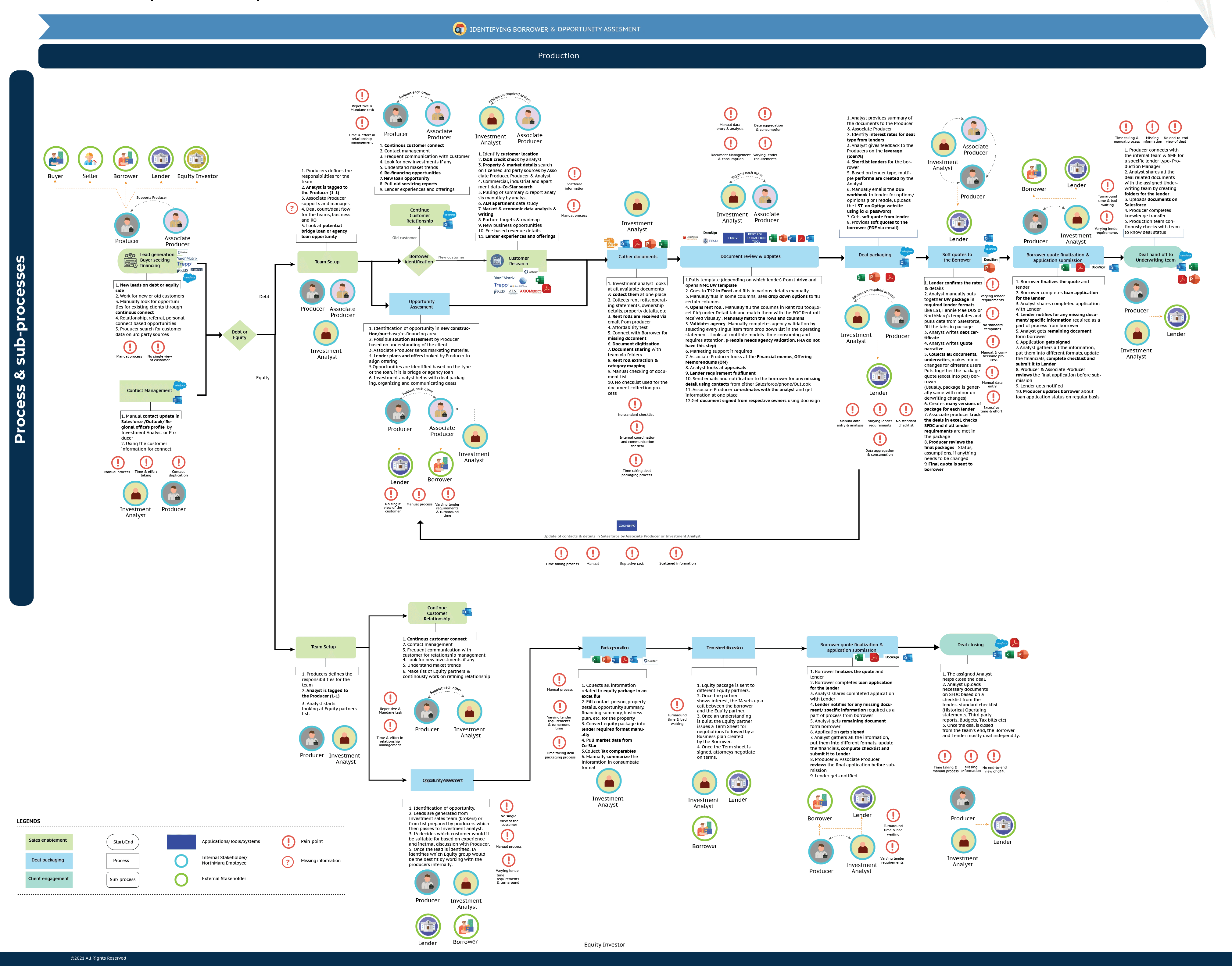
The main workflow in detail - Production
The deal making engine
Lead Identified & Lead processed

Taking a deeper look - Primary research
Next, to uncover the invisible, we moved on to understand the people.
Over three weeks, we ran 23 sessions across roles -
Producers, Investment analysts, Associate producers, Brokers, Marketing writers
Process
Prep
Conducted alignment workshops with client stakeholders to agree on research focus areas.
Selected participants strategically to cover all major roles in the sales workflow.
Fieldwork
One-on-one interviews → captured personal frustrations and workarounds
Group workshops → surfaced dependencies and breakdowns across teams.
Tool usage tracking → revealed overlaps, duplication, and access gaps.
Synthesis
Clustered insights in Miro to identify recurring themes.
Pulled out cultural nuances and user mindset differences.
Built early “idea buckets” with consultants to guide opportunity framing.

The core insights
Legacy, silos, and invisible friction
Every vertical- loan, portfolio, underwriting, had its own tools, its own processes, and its own chaos. People repeated work unknowingly.
Teams were unsure who handled what.
And all of it operated beneath the surface of “business as usual.”
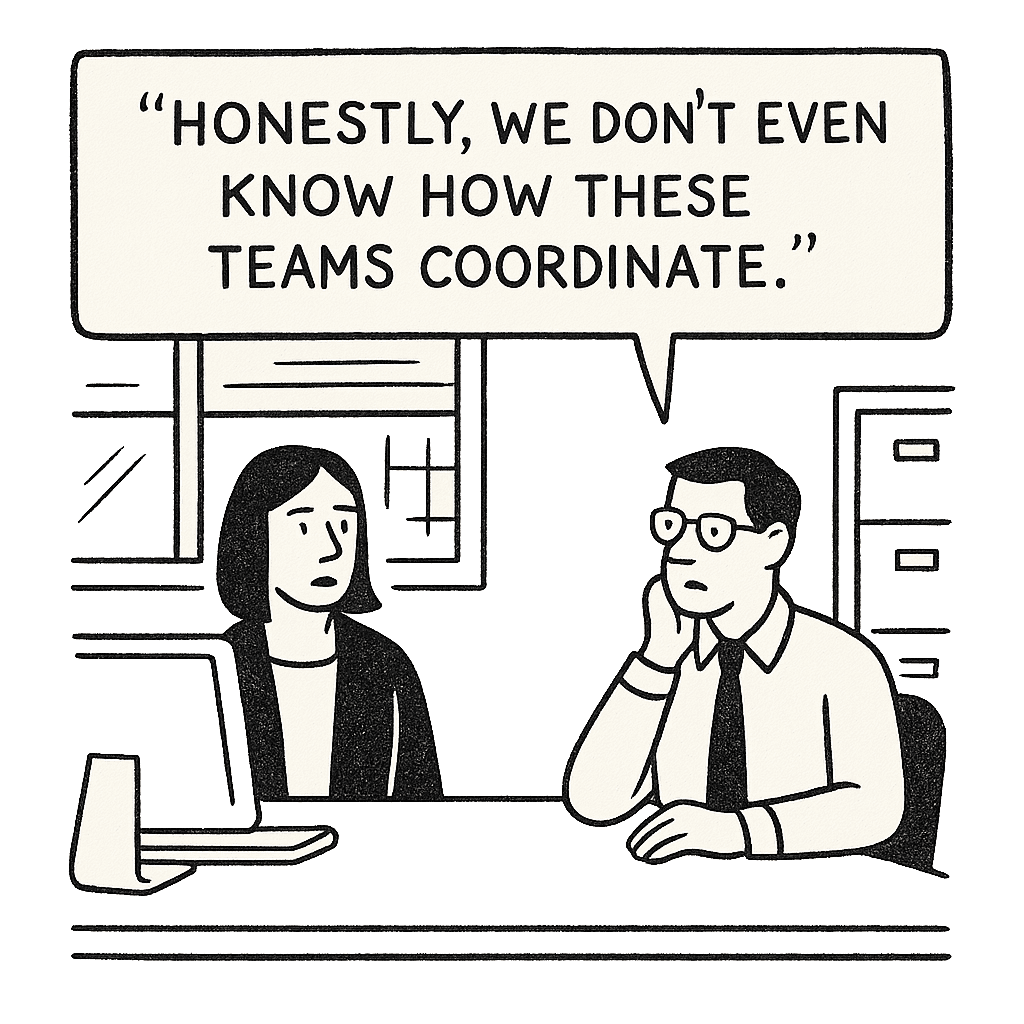
The Core Challenges
The deliverables -
A detailed look
Who we designed for
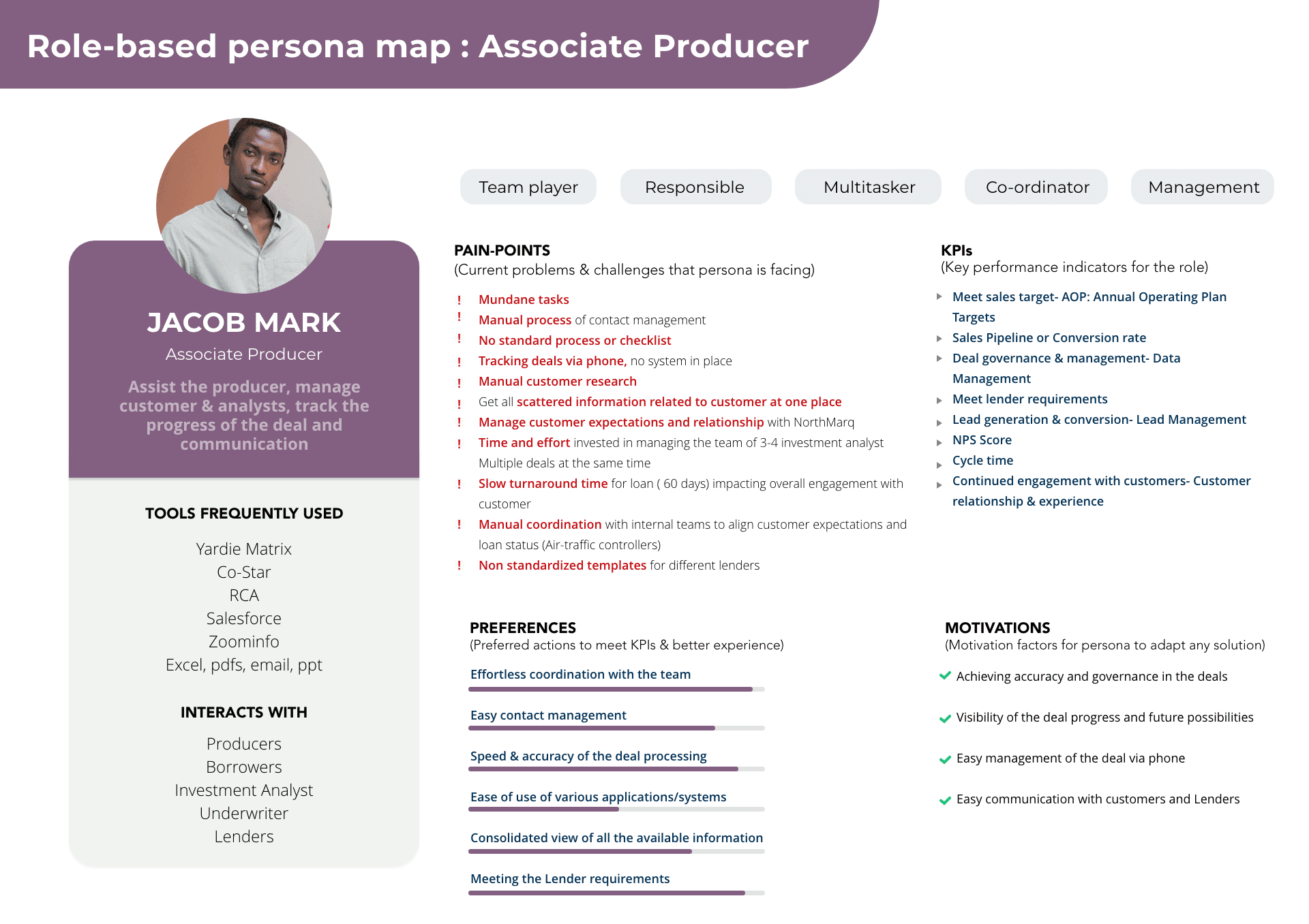
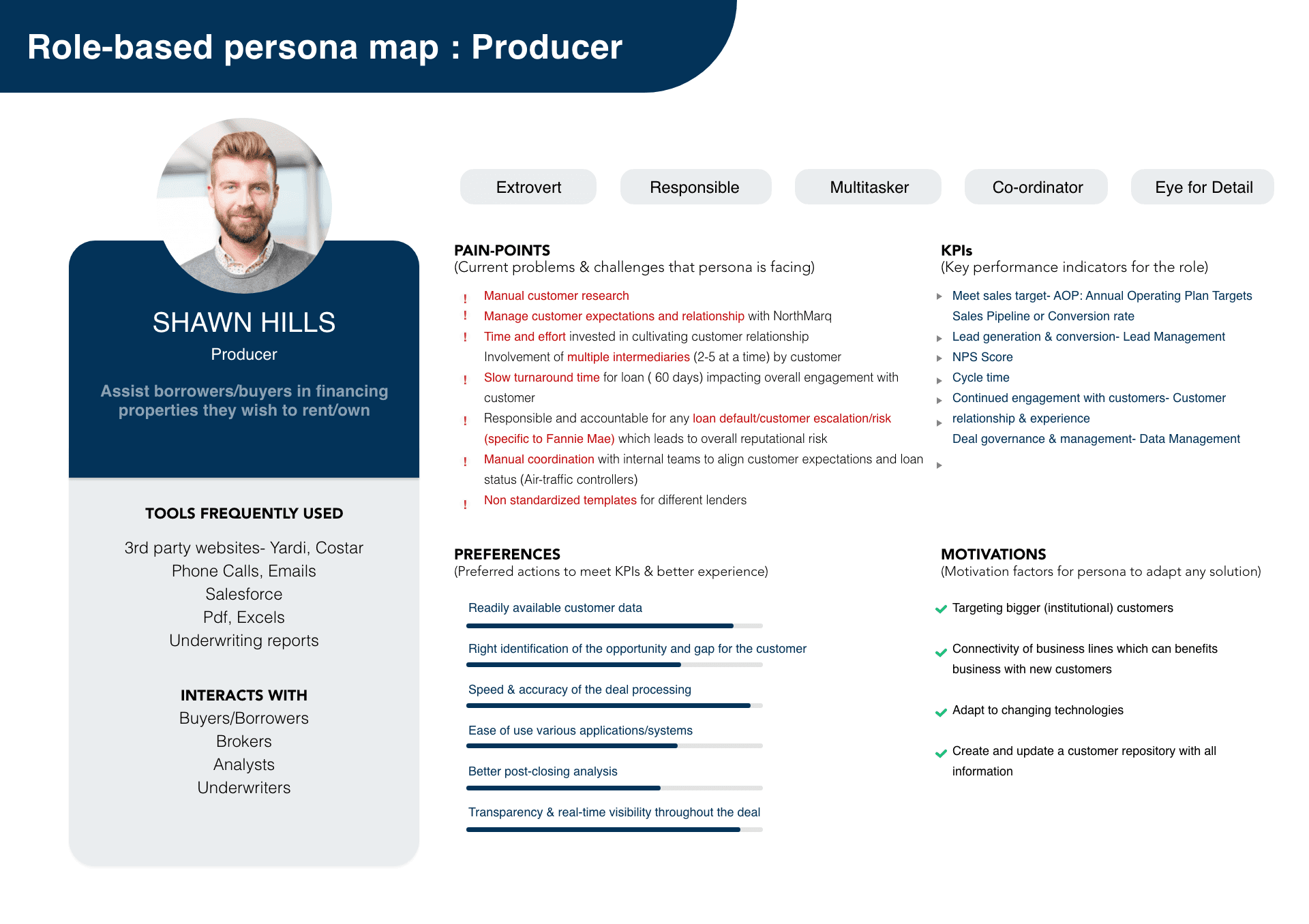
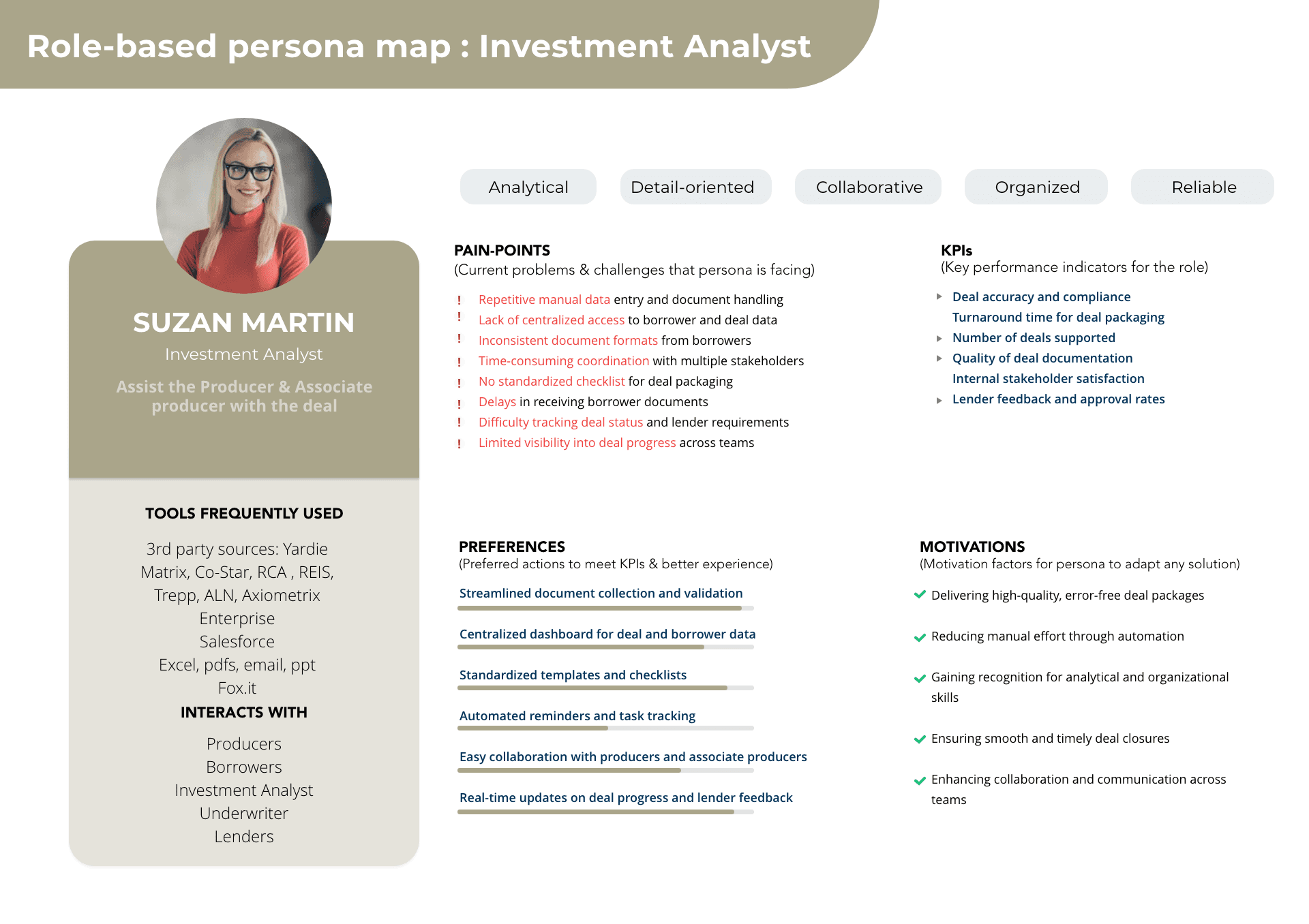
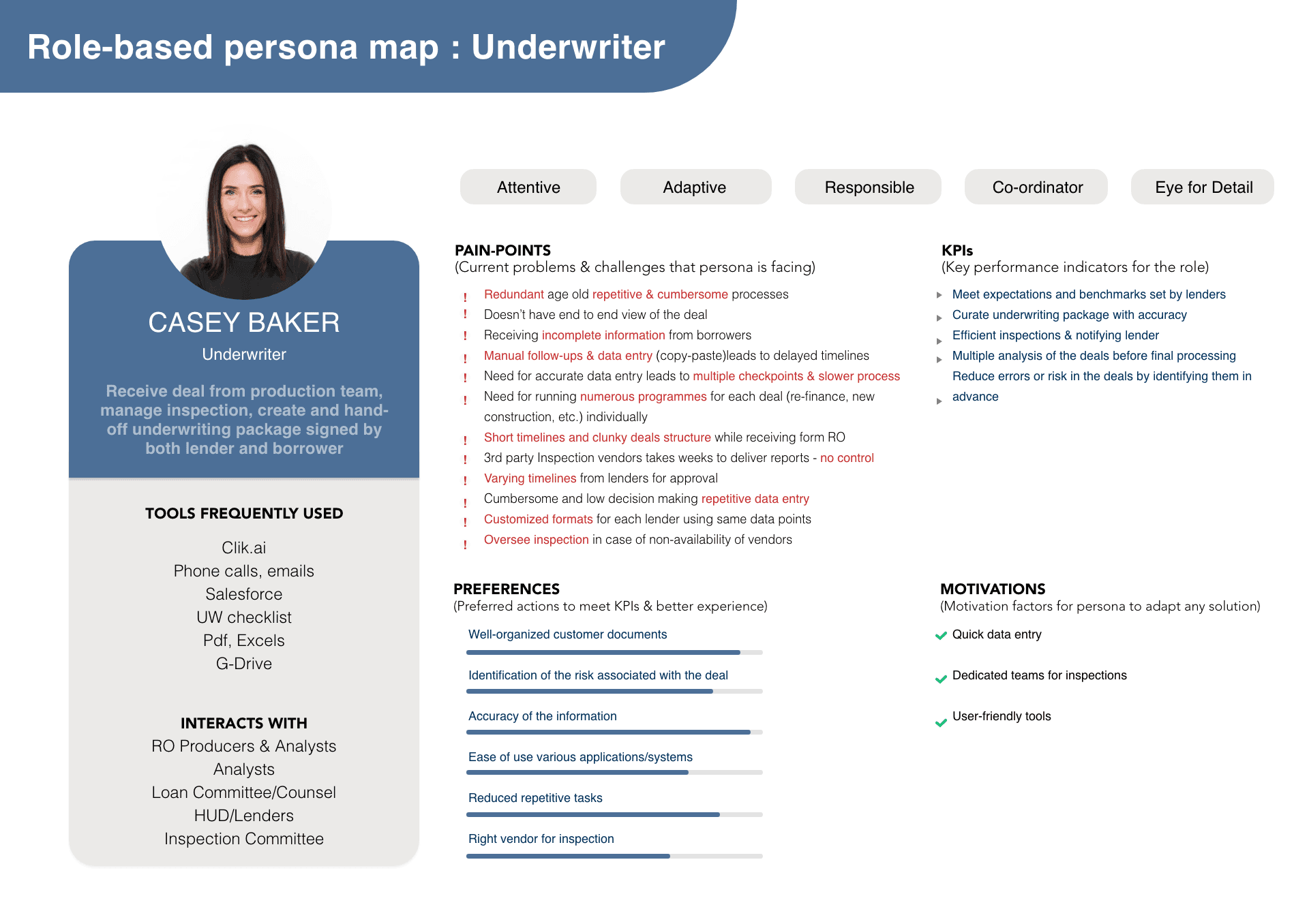
We created role-based personas to represent the backbone of the sales workflow. Each persona synthesized motivations, frustrations, and tool dependencies.
Example -
Jacob Mark, Associate Producer
Motivation
Move deals forward quickly, maintain client trust.
Frustrations
Too many disconnected tools, manual data entry, always chasing status updates.
Quote
"Most of the time I’m not at my desk—but I still need deal info in seconds"
User personas in detail
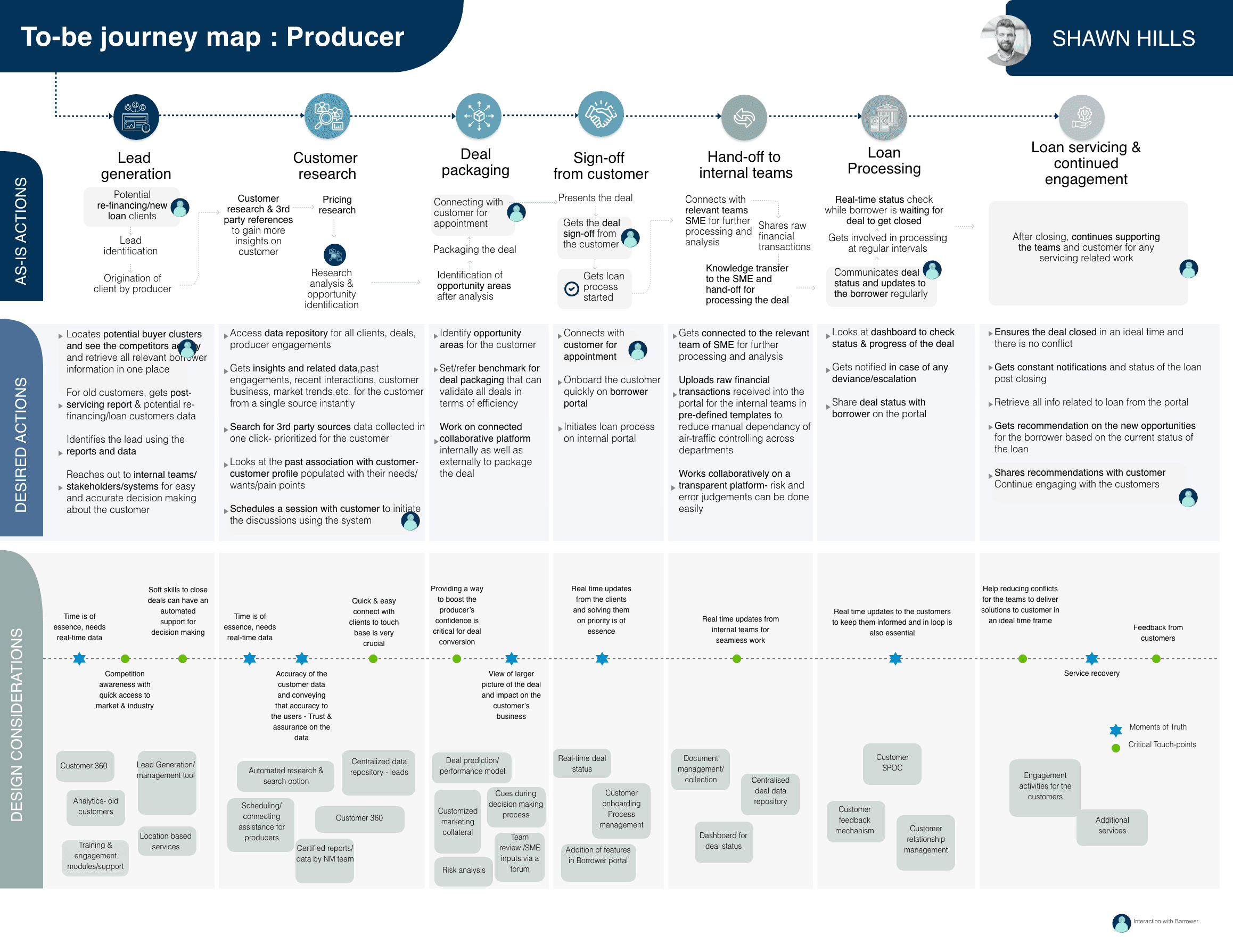
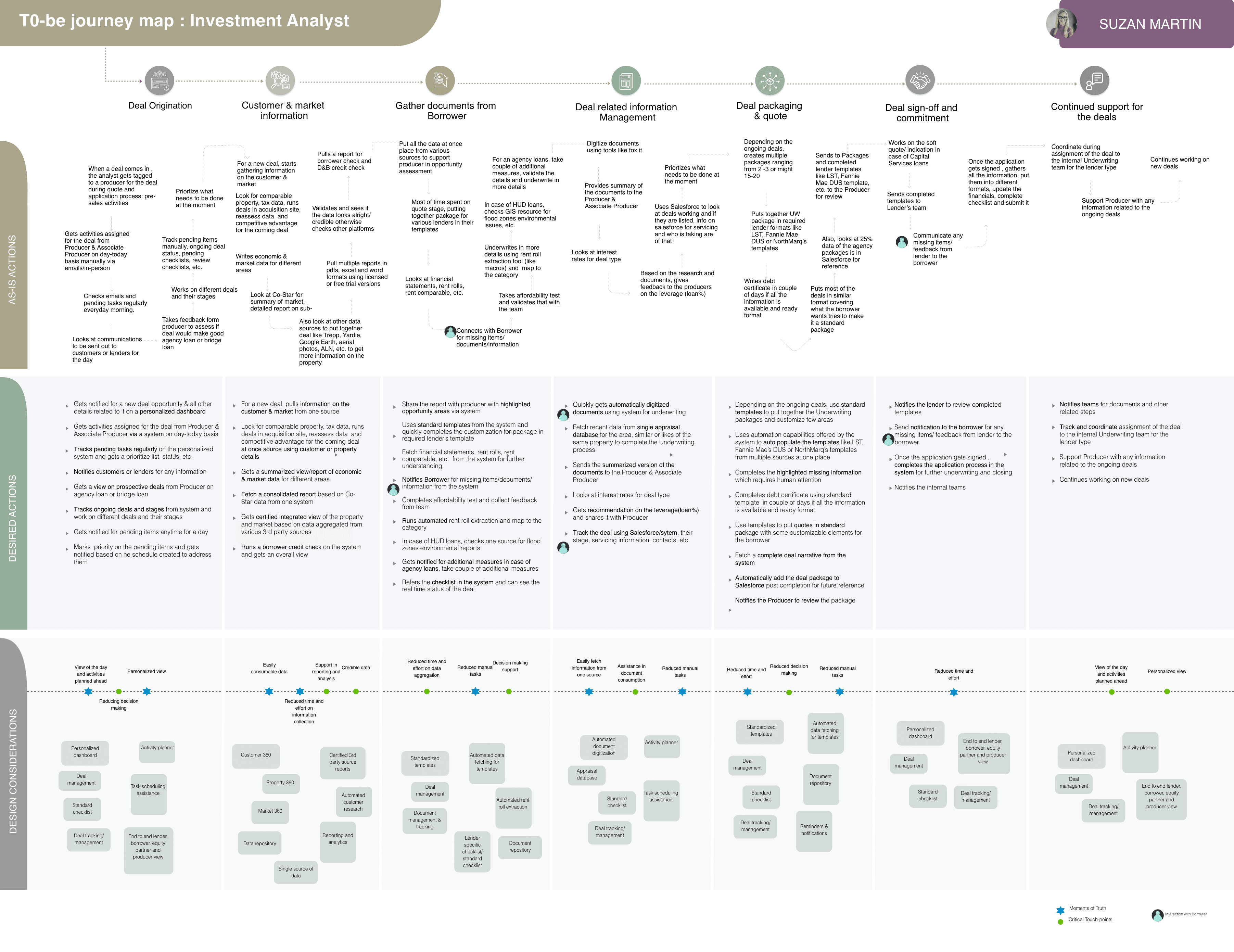
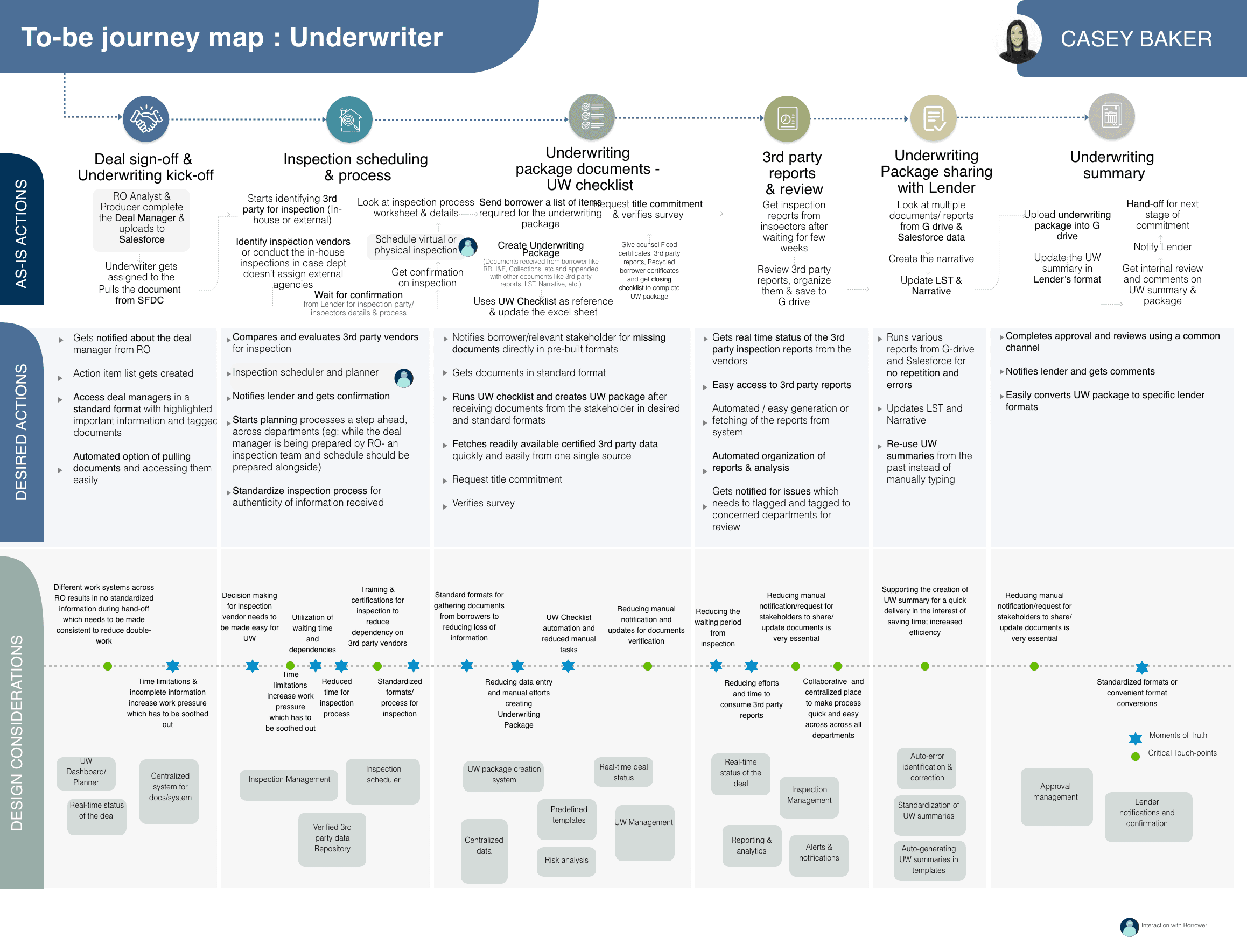
From As-is to To-be
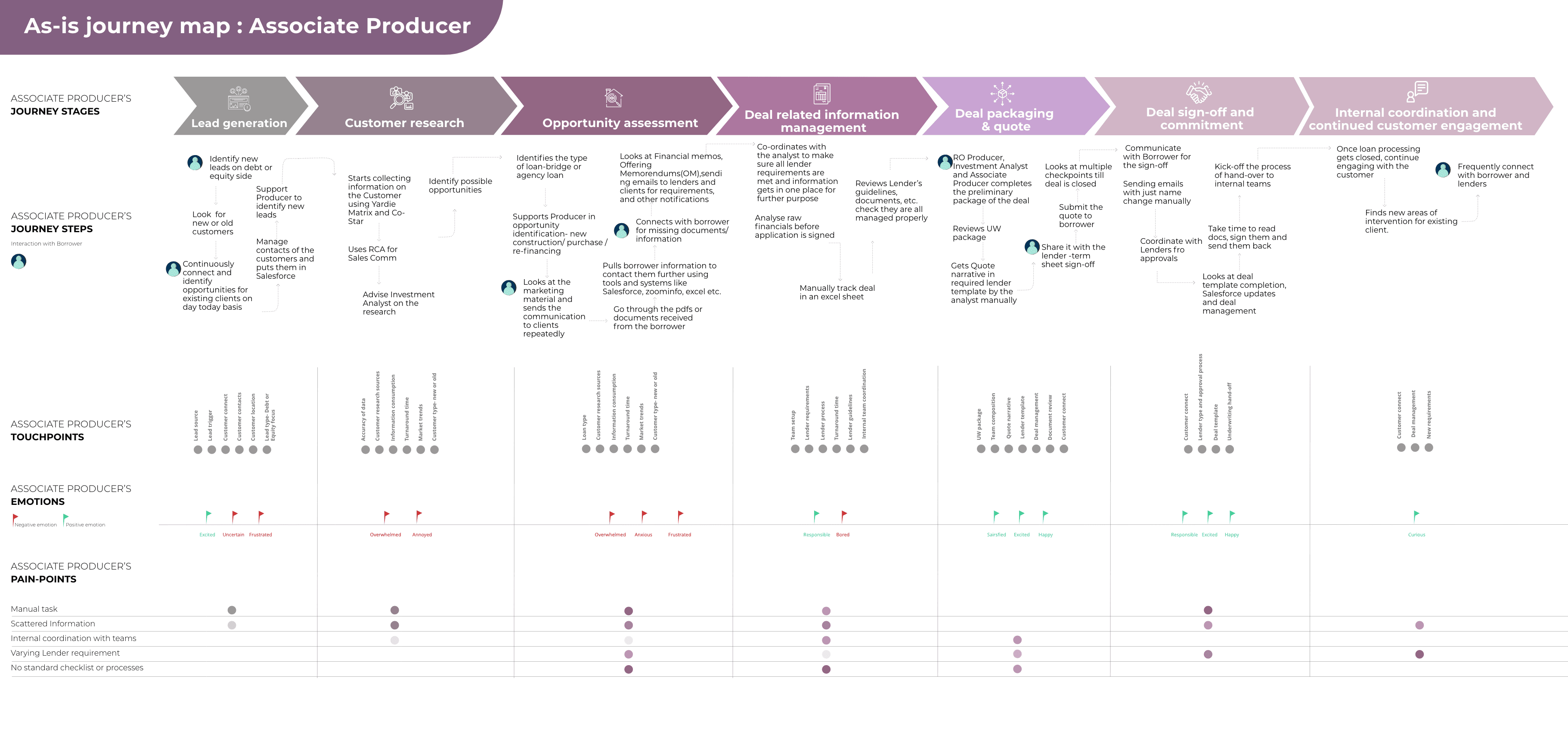
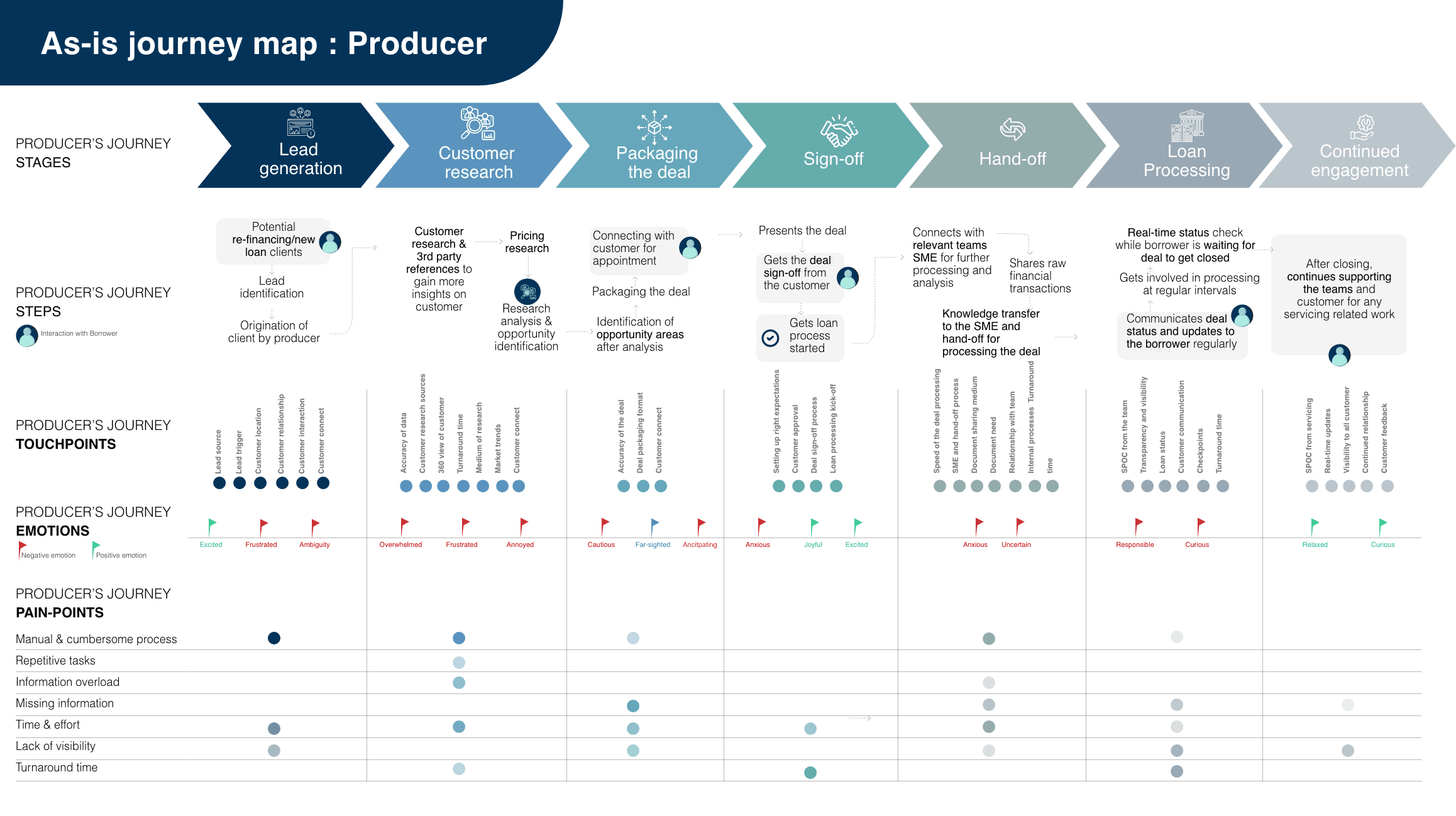
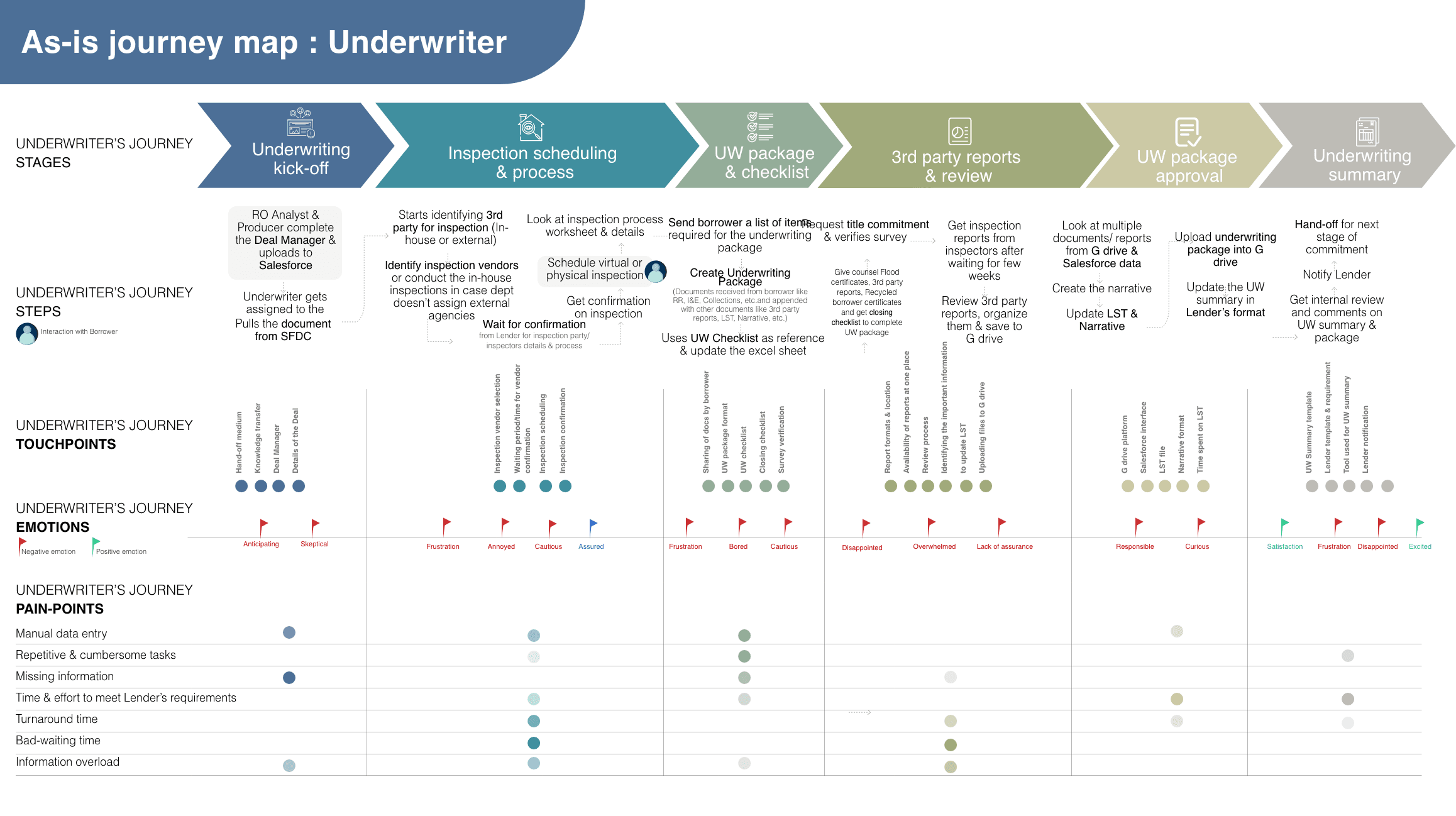
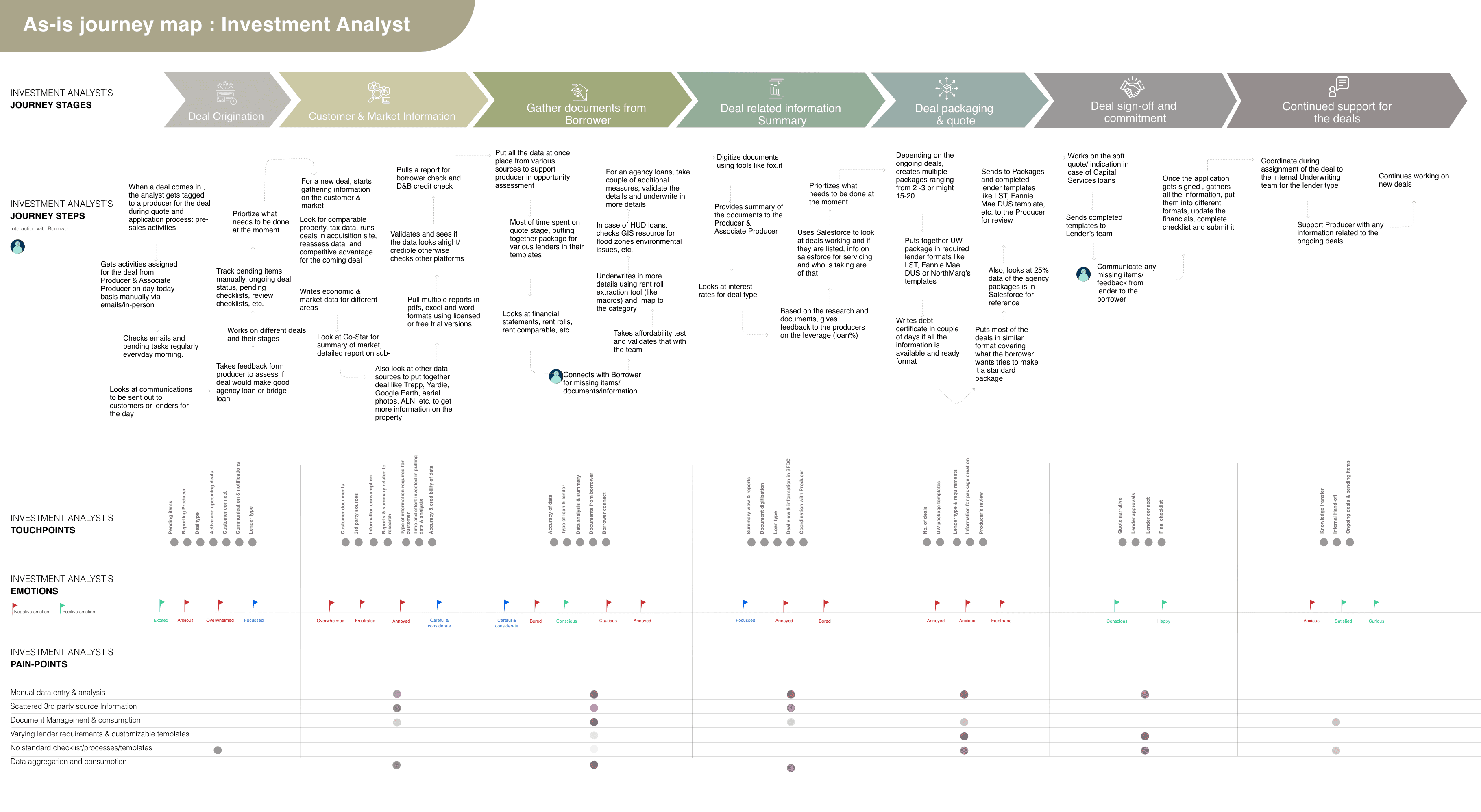
We mapped the As-is journeys to visualize where users lost time and repeated effort. Then, together with stakeholders, we
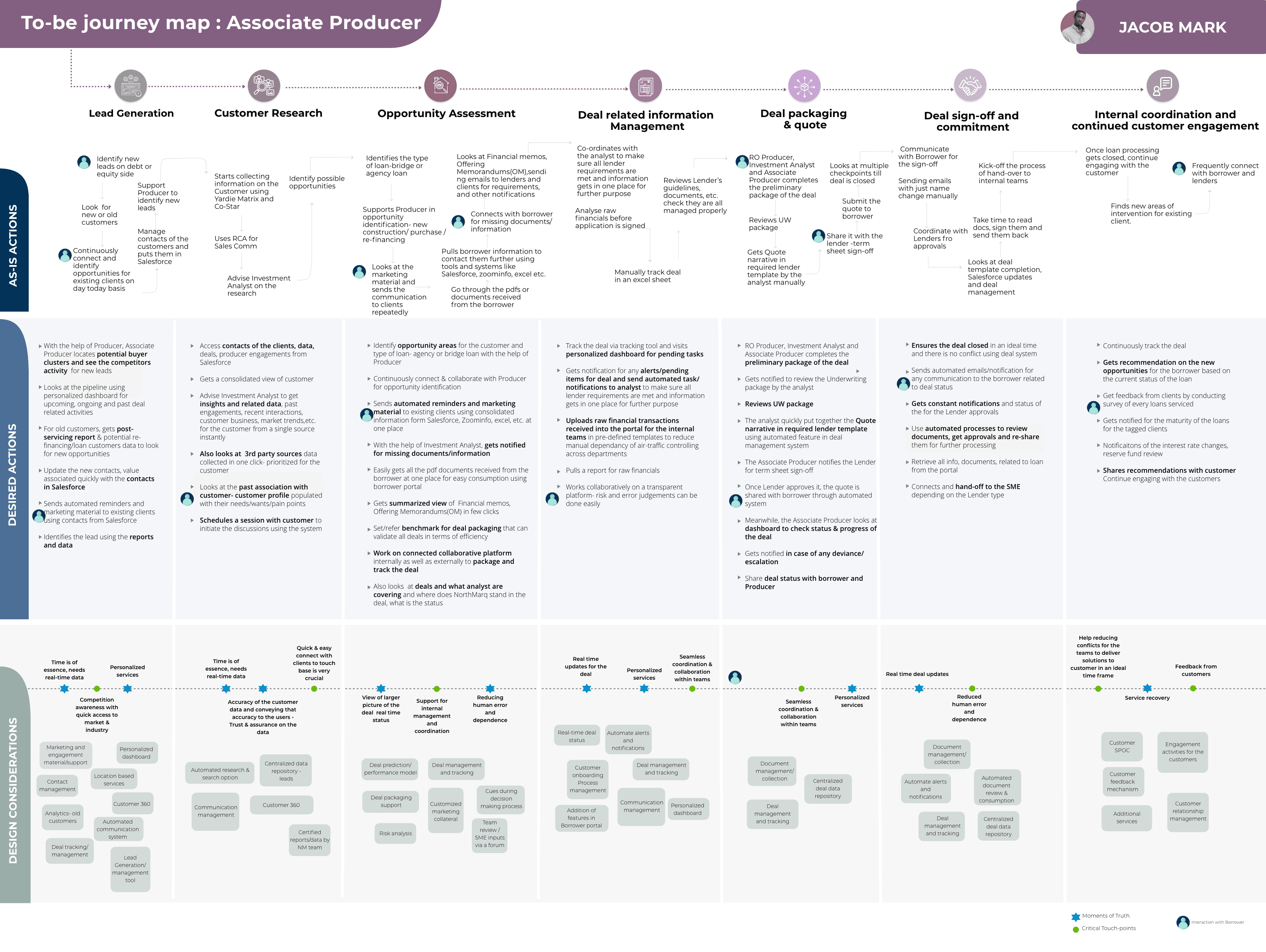
co-created To-be journeys that showed a more streamlined, user-first flow.
These maps revealed where multiple roles repeated the same research, where customer updates lagged, and where siloed tools slowed deal progression.
The Associate Producer’s world
The Associate Producer plays a central role in sales workflows -generating leads, researching customers, packaging deals, and coordinating execution. But their day is riddled with inefficiencies:
🚩
Tool overload: constantly juggling emails, CRMs, and third-party reports.
🚩
Document churn: managing endless versions of the same deal file.
🚩
Approval limbo: losing momentum while waiting for delayed feedback.
As-is Journeys in detail
Reimagining the Associate Producer’s journey
In the as-is journey, the Associate Producer’s work was slowed by repetitive tasks, fragmented tools, and coordination bottlenecks. The to-be journey envisions a more seamless experience—one where automation, integration, and collaboration replace friction

Lead generation :
is automated and tracked in one place
Customer research :
happens on a unified dashboard with profiles and history at hand.
Deal documents :
live in a single repository with real-time version control.
Approvals :
move faster through digital workflows and notifications.
Internal coordination :
is structured around collaborative tools and clear task tracking.
To-be Journeys in detail
Connecting the frontstage and backstage
To make the complexity visible, we built a service blueprint that connected:
Customer actions → what clients see and experience.
Frontstage actions → what producers and analysts do in visible workflows.
Backstage actions → internal coordination, duplication, dependencies.
Support processes → systems, tools, and IT dependencies.
The blueprint highlighted how backstage duplication (like two teams
re-entering the same client info) created frontstage delays for customers.
This was the first time leadership saw their processes connected end-to-end.
The solution themes and backlog


✦ Created a shared, organisation-wide understanding of complex production workflows
✦ Helped stakeholders align on priority problem areas before committing to solutions
✦ Provided a clear foundation for product and data architecture decisions
✦ Reinforced the value of service design as a precursor to effective digital transformation
What I took away
This project taught me that service design is often less about building the perfect solution - and more about revealing the real problem.
I learned to:
Hold space for ambiguity.
Trace complexity back to human needs.
Spot cultural nuances and patterns in research.
Make invisible systems visible—one sticky note at a time.
If I did this again, I’d bring stakeholders into co-creation even earlier, to ensure alignment on priorities and faster buy-in.